A ‘moving’ 9/11 tribute

A ‘moving’ 9/11 tribute

Rolling-Thunder-Memorial.jpg

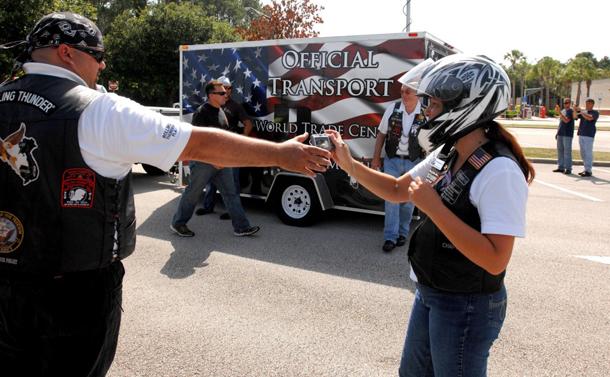
With rumbling tailpipes, a team of motorcyclists ushered a large World Trade Center beam across Florida.

Before the attacks of Sept. 11, the nearly 12-foot-long beam supported a window in the WTC's north tower for more than 30 years, according to a report written by Matt Soergel of The Florida Times-Union.

The steel was hauled by firefighters from Bradenton, Fl., to the Southern Manatee Fire and Rescue Department, where it'll be used in a monument to those who died on 9/11. The bikers, most of whom were firefighters, took shifts while accompanying the steel on its journey to its new home, the report says.

A former New York City firefighter waited for the steel beam to arrive so he could take his shift. The ex-firefighter, Dave Ellsworth, had a personal connection to the remnant steel.  On 9/11, he lost his friend, Brian Hickey, a captain in the New York City Fire Department. The two men met in 1972, when they were 18 and new volunteer firefighters on Long Island in Bethpage, NY.

"He was there with his guys, doing what he loved," Ellsworth said in the Times-Union report.

Thanks to Matt Soergel and The Florida Times-Union, see more photos of the memorial's stop in Nassau County, Fla.

By Michael Frazier, Sr. Communications Manager for the 9/11 Memorial

The Lens: Viewing the 9/11 Memorial

The Lens: Viewing the 9/11 Memorial

Memorial-pool-board-e1279307580490.jpg

Staff photographer Amy Dreher snaps a lot of pictures at the World Trade Center site, documenting the construction progress of the 9/11 Memorial. Amy also trains her lens on the smaller pieces that may be overlooked with a project of this magnitude. Through "The Lens: Viewing the 9/11 Memorial," share some of the unique vantage points captured by Amy.

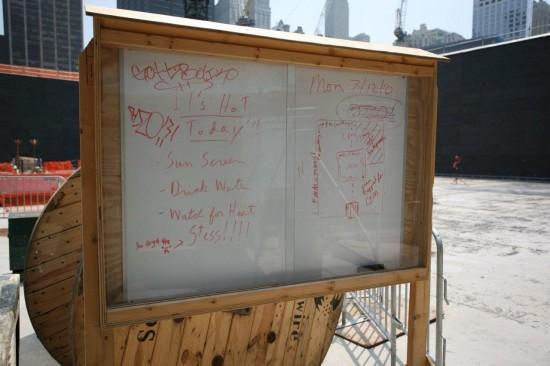
The Message: A close inspection of the message board reminds construction workers to drink plenty of water on hot days. The board sits in the 9/11 Memorial's north pool, where granite work is nearly completed.  Read more about the memorial pools here on the MEMO.

By Michael Frazier, Sr. Communications Manager for the 9/11 Memorial

Preview Site Offers Visitors a Chance to Honor, Remember and Contribute

Preview Site Offers Visitors a Chance to Honor, Remember and Contribute

FDNY-Ornament.jpg

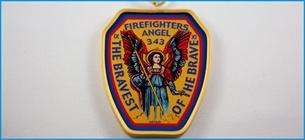
Above:  Two ArtAID ornaments available at the 9/11 Memorial Preview Site, in honor of the FDNY and NYPD. 

Mike Blackwell describes himself as a “very patriotic person.”   At the time of the Sept. 11 attacks, he was a field training officer with the North Las Vegas Police Department, where he is serving as a police sergeant and K-9 unit supervisor. 

Blackwell was asleep when the World Trade Center towers were hit.  His wife received a call from dispatch requesting Blackwell to start his shift early that morning.  His early start was a precaution against any possible attacks in their area.  Fortunately, Blackwell said, “I went in service as usual and worked what turned out to be an uneventful shift while tracking the news.” 

The events of 9/11 caused Blackwell to feel “rage, hate and vengeance against our attackers.”  However, as time went on, he said he increasingly felt a great deal of sadness and American pride. 

“The sadness for the loss of American lives on that day still remains,” he said.  “When I think about the courageous acts of the New York Police, fire and EMS workers on that day, it reminds me why I’m proud to be an American.” 

Last summer, Blackwell’s son wanted to visit New York for a family vacation.  Blackwell said he and his wife decided they had to visit the World Trade Center site, and they did in June. 

While Blackwell was standing on the corner of Vesey and Church Streets, he saw the 9/11 Memorial Preview Site.  Blackwell said he got “caught up in the emotion of looking at the site and thinking about that day.”

After leaving the preview site, Blackwell’s wife showed him the K-9 police officer bookmark and ornament she purchased.  He realized he wanted to bring back items as well so he ordered more from the preview site and the 9/11 Memorial’s Museum Shop.

All net proceeds from the shop’s sales are dedicated to developing and sustaining the National September 11 Memorial & Museum.

Blackwell purchased six bookmarks and two ornaments to give each one of his K-9 handlers.  He said these items "represent what we do and our commitment to what we do regardless of the risk involved. 9/11 is the ultimate example of that commitment and risk."

Design: The images for the ornaments were created by Keith Paiseczny, artist and founder of ArtAID, whose guardian angel designs have become important and inspirational symbols of tribute and healing in response to Sept. 11. They are used in tributes and remembrance services and can be seen hanging in firehouse and police precincts across the country.

By Meghan Walsh, Communications Associate for the 9/11 Memorial

Online database of photos reflect on 9/11 aftermath

Online database of photos reflect on 9/11 aftermath

Make-History-Sylvie-B.-2.png

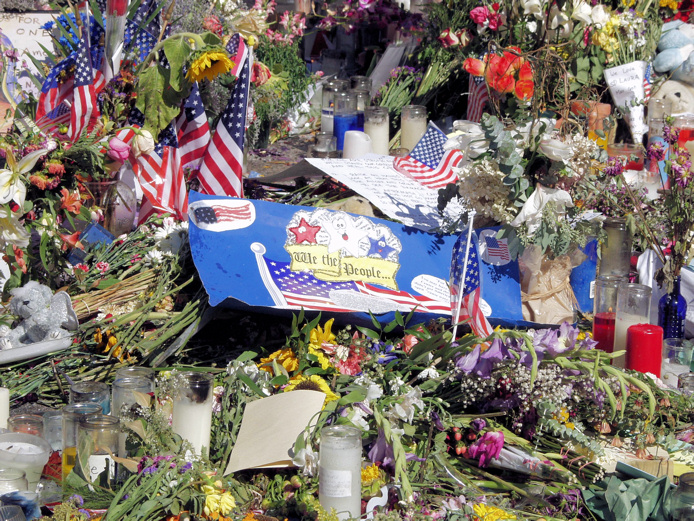
Tributes dedicated to the victims of 9/11 appeared all over New York City in the weeks and months following the attacks.  Photographs of these sites, like the ones taken above by Sylvie Ball, are now part of the National September 11 Memorial & Museum’s Make History online archive.

Make History is a collective telling of the events of 9/11 through the eyes of those who experienced it, both at the attack sites and around the world.

Ball has contributed many of the photographs she took in the aftermath of Sept. 11 to the online database.  Many of her photos reflect the remembrance of the victims and the makeshift memorials honoring them. 

"On Sunday [Sept. 16], I went to Union Square with friends and photographed many temporary shrines comprised of flowers and candles set up throughout the park," said Ball in her submission statement.  "Musicians and prayer groups mingled with onlookers as people tried to cope with loss, express their grief, pray for the lost and pay tribute to the twin towers that were so brutally taken from us."

Visitors to the Make History site can download their own pictures, videos and stories about 9/11 and the impact it had globally. The Make History archive currently contains more than 1,000 photographs and 300 stories. 

Image (left): Flowers, candles and flags surround a poster that reads "We the People." (Photo by Sylvie Ball)

By Meghan Walsh, Communications Associate for the 9/11 Memorial

A President Greets a Queen


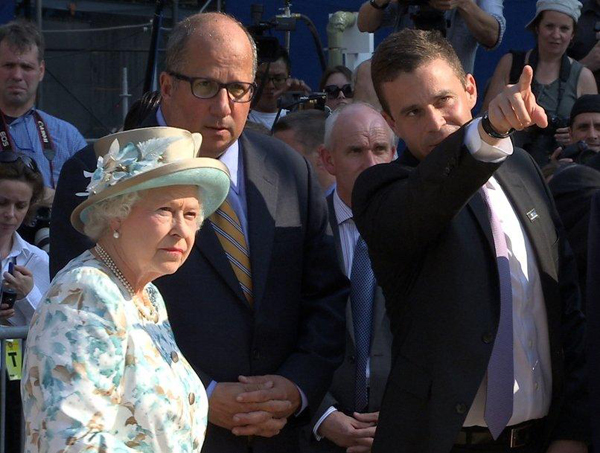
The recent visit of Queen Elizabeth II of the United Kingdom was special to New York City, her first trip there since 1976. It was also an exceptional moment for 9/11 Memorial President Joe Daniels, who greeted the queen on his birthday as she briefly toured the future site of the memorial.

The queen’s visit earlier this month was part of her North American tour.  On July 6, she visited the World Trade Center site, where she paid tribute to the 2,982 people killed on 9/11 and in the 1993 WTC bombing.  She was accompanied by her husband, Prince Phillip. The queen’s son, Prince Charles, and his wife, Camilla, visited ground zero in 2005.  Prince Harry, the son of Prince Charles, visited last year and laid a wreath on the site.

The queen also visited The British Garden at Hanover Square, which memorializes the 67 British citizens who lost their lives on Sept. 11.

The following day after the queen’s visit to the WTC site, Londoners gathered in Great Britain to recognize the fifth anniversary of the July 7, 2005, terror bombings that killed 52 people.

By the  9/11 Memorial Staff

A Living History: The Stories Behind 9/11 Artifacts

A Living History: The Stories Behind 9/11 Artifacts

DavidBrinkHelmet.jpg

“A Living History: The Stories Behind 9/11 Artifacts” is a three-part series written by oral historian Jenny Pachucki of the 9/11 Memorial Museum and edited by Meghan Walsh, communications associate for the 9/11 Memorial. "Three Ensembles: The Seasons of Ground Zero"  is part 3 of 3 in the series. (All photos by 9/11 Memorial staff)

NYPD officer David Brink recently arrived at the 9/11 Memorial Museum's office with a large suitcase.  From it, he pulled out what he called his "three ensembles," all of which he donated to the museum's collection along with other storytelling artifacts. Each of the three ensembles were articles of clothing that correspond to certain times Brink worked at ground zero for nine months during the recovery period.


A Clear, Blue Sky on 9/11
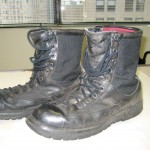
On September 11, 2001, Brink dressed in light clothing perfect for a beautiful fall day. Brink recalled donning his standard issued emergency services unit response uniform, consisting of sturdy black boots, gun belt, ropes and repelling gear. The uniform was completed with a Scott air pack. While his response uniform was light, his gear weighed about 70 pounds.  “It is mind-blowing to think about the men and women who attempted to climb the stairs of a 110-story building on a hot day, carrying 70 pounds of gear,” said Oral Historian for the 9/11 Memorial Jenny Pachucki.  “It makes sense that they would want their clothing to be a light as possible.”


Among the Protective Gear, a U.S. Flag
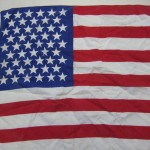
Laden with protective gear, Brink sought inspiration in a piece of clothing that wasn't standard issued.  It was the U.S. flag scarf he “grabbed from the hospitality tent.”  He wore it around his neck as a reminder of the swell of patriotism and support he felt while working “on the inside.” A uniform supply stored donated battled tested pants, jackets and first-responder patches to Brink and other workers. He was grateful for the clothing donations because he was able to replace, without any cost to him, NYPD uniforms damage at the site. NYPD officers are required to pay for their own uniforms.


Recovery Work Continues into the Bitter Cold
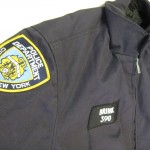
As fall turned to winter, Brink wore "winter wear" as recovery efforts continued. His heavy overall pants, which were donated to workers at respite centers, were topped by a thick NYPD jacket. The warm clothes were a welcomed reprieve from the face-numbing winds.  “Before we got them, we used to freeze our (expletive) off down there with the wind coming in off the Hudson," Brink said. "We felt like we were Washington’s troops at Valley Forge or something.”  The winter ensemble didn't get dirty as much because there wasn't “as much dirty digging” at that point in the effort.

Three ensembles, Three seasons

Brink's three ensembles share a common theme - attack, rescue and recovery - but each conveys a different story. It's artifacts like these that make an unprecedented event in history tangible and, while still difficult, easier to understand. The clothing aptly represent the "seasons of ground zero" and help close the gap between the people who experienced the aftermath and the people exploring 9/11 history. Many of the future visitors to the memorial museum won't be able to relate to what it was like to work amid rubble in a large pit in the middle of winter. It's authentic artifacts like what Brink donated that help make these experiences visceral for all.

By Jenny Pachucki, Oral Historian for the 9/11 Memorial
George Steinbrenner: Yankee owner, 9/11 memorial supporter

George Steinbrenner: Yankee owner, 9/11 memorial supporter

HalSteinbrennerSignature.jpg

George Steinbrenner, who died Tuesday of a heart attack at age 80, is known for being the chief architect behind rebuilding the Yankees.  He was also a chief supporter behind helping to build the 9/11 Memorial.

“He was a champion who made New York a better place, and who always gave back to the city he loved,” Mayor Michael Bloomberg said in a statement. “He has left an indelible legacy on the Yankees, on baseball, and on our city, and he leaves us in the only way that would be appropriate: as a reigning world champion.”

Under Steinbrenner’s leadership, the Yankees have made a number of contributions to help rebuild the city in the wake of 9/11 and create a lasting tribute at the World Trade Center. The Yankees organization donated $ 1 million to help build and sustain the 9/11 Memorial.  In 2007, the Yankees hosted a ceremony as part of the 9/11 Memorial’s national tour to help raise funds and awareness for the memorial at Steinbrenner Field, the ball club’s spring training facility in Tampa, Fla.

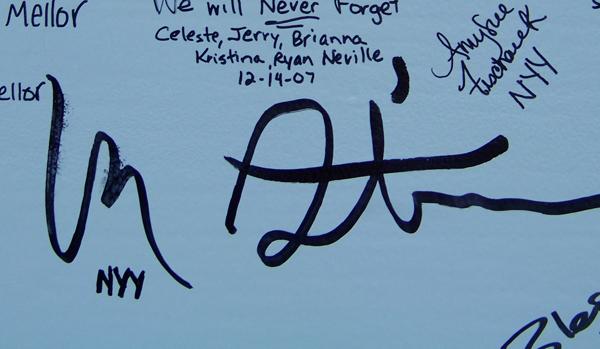
First responders, 9/11 family members and public officials attended the ceremony. During the event, the public was invited to sign a steel beam that is being used in the construction of the memorial. The beam, which weighs about 4 tons and is about 37-feet long, was signed by George’s son, Hal Steinbrenner.

The Yankees' support goes beyond donations. In the weeks after 9/11, Yankee Stadium was host to an interfaith “Prayer for America” service to help heal a grieving city and country. The event was televised around the world and helped victims’ family members, survivors, first responders, and the public come together in a meaningful way.

Read more here about a ticket stub from the September 23, 2001 prayer service donated to the museum’s permanent collection. In the collection, there is also a well-worn Yankees baseball cap donated to the museum by the family of Steven Morello, who was killed on 9/11.   

Through artifacts linked to the beloved Bronx Bombers, future visitors to the 9/11 Memorial Museum will learn more about the history of the Sept. 11 attacks and how New York City and the rest of the world responded.

By 9/11 Memorial Staff

A Living History: The Stories Behind 9/11 Artifacts

A Living History: The Stories Behind 9/11 Artifacts

TwinTowerSymbolSteel-1.jpg

"A Living History: The Stories Behind 9/11 Artifacts" is a three-part series written by oral historian Jenny Pachucki of the 9/11 Memorial Museum and edited by Meghan Walsh, communications associate for the 9/11 Memorial. "Symbol Steel" is part 2 of 3 in the series.

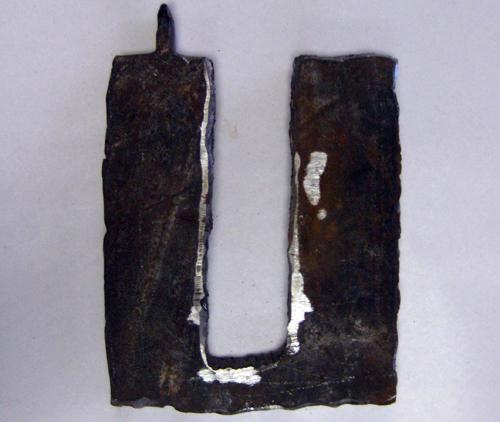
He knew how to handle a striker and blow torch. A deft welder, NYPD's David Brink began to forge symbols from remnant steel during his time at ground zero. The emergency services unit officer welded the symbols from large pieces of steel once piled at the southwest corner of the World Trade Center site near Liberty and Church streets.

Recovery efforts slowed at site at that particular time because of major construction activity, which required workers to clear the area.  Brink asked members of an ironworkers union if he could use their equipment, and they consented.  In the nine months he worked at the WTC site, Brink created multiple crosses and one silhouette of the twin towers from the steel. He recently donated the works along with other artifacts to the 9/11 Memorial Museum.

Other ironworkers joined Brink in creating shapes from the steel during their spare time, which wasn't often.  They created religious symbols such as a cross or Star of David.  But not all steel had religious symbols. One beam at hangar at JFK Airport, where many of the site’s large artifacts and steel are stored, shows the cutout of the New York City skyline—with the twin towers still in place.

The above photos show the steel beam from which crosses were cut and a cross freed from the steel with a blow torch.

By Jenny Pachucki, Oral Historian of the 9/11 Memorial Museum

A Living history: The stories behind 9/11 artifacts

A Living history: The stories behind 9/11 artifacts

DavidBrinksGloves.jpg

 "A Living History: The Stories Behind 9/11 Artifacts" is a three-part series written by oral historian Jenny Pachucki of the 9/11 Memorial Museum and edited by Meghan Walsh, communications associate for the 9/11 Memorial. "Gloves" is part 1 of 3 in the series.

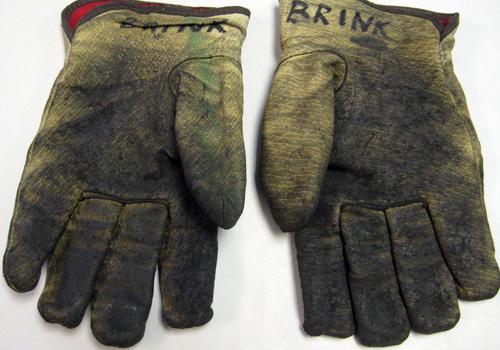
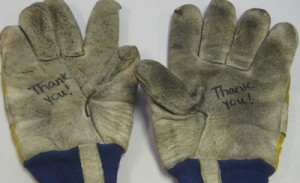
David Brink, a NYPD emergency services unit detective, donated three pairs of gloves to the 9/11 Memorial Museum, each telling a different yet equally powerful story.

One pair - now blackened with soot - was the set he wore on 9/11.  As the 110-story buildings were falling on top of him, he put his gloved hands to his face to protect against suffocating dust.  These gloves reflect what it was like to be trapped in the huge black cloud created by the destruction of the skycrapers.

A second pair that Brink donated tells a very different story.  The set is the heavy work gloves he picked up at the “hospitality tent” during the period of recovery and rescue.  At the tent, workers could take all sorts of goods and supplies that were donated from across the country.  Brink took a pair he thought looked particularly warm.  While working on the wreckage pile, he discovered the words “Thank you!” written in black marker across the palms of the gloves.

He told the museum anytime he was working and discouraged, he'd look down at the writing on his gloves and think “these could be from some kid in Iowa, or some housewife in California who were rooting for us and appreciated us, and it gave me the boost I needed to keep working.”

Jenny Pachucki, Oral Historian for the 9/11 Memorial Museum
A Living history: The stories behind 9/11 artifacts

A Living history: The stories behind 9/11 artifacts

Brink-ID-Badge.jpg

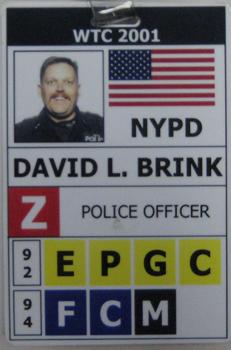
"A Living History: The Stories Behind 9/11 Artifacts" is a three-part series written by oral historian Jenny Pachucki of the 9/11 Memorial Museum and edited by Meghan Walsh, a communications associate for the 9/11 Memorial. The following is a preview to the series, which begins Tuesday, July 13.

The collection of artifacts recently spread out on a table before the 9/11 Memorial Museum's curators and exhibitions team stirred their enthusiasm.  They couldn't contain their excitement when, last month, NYPD detective David Brink donated items steeped in the history of the Sept. 11 attacks. Brink responded to the attacks on Sept. 11 and immediately began evacuating civilians to safety. He survived the collapse of both twin towers, narrowly escaping with his life.  Brink worked the duration of the rescue and recovery effort at ground zero, and he saved everything that he possible could that would tell his story. 

“Brink is what we like to call a ‘curator’s dream come true,’” said Jenny Pachucki, oral historian for the 9/11 Memorial Museum. The variety of Brink's donated artifacts will truly help curators tell the story of recovery, survival and lost.

 A couple weeks ago, Brink packed articles and items he saved from 9/11 into a large suitcase and came to the memorial offices in lower Manhattan, where he donated them to the museum's collection. 

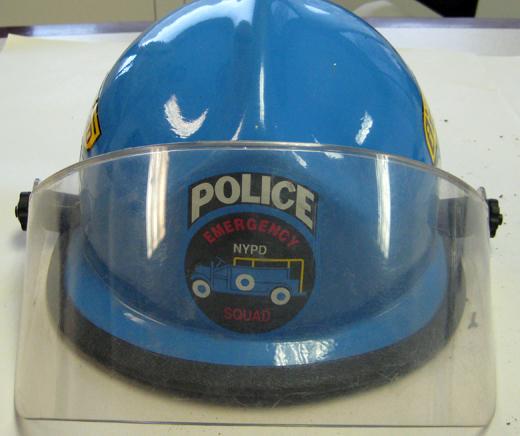
Brink’s collection includes World Trade Center steel, NYPD helmets and gear worn on Sept.11, and tools used during rescue and recovery operations at ground zero. Over the next three days, read about these artifacts and Brink on The MEMO blog.

By Jenny Pachucki, Oral Historian for the 9/11 Memorial Museum
Subscribe to