Watch Pulitzer Prize-winning NYT reporter discuss Taliban capture

In case you missed it, here's a video of two-time Pulitzer prize winner David Rohde, who discussed his capture before a crowd at the 9/11 Memorial Preview Site, 20 Vesey St. His story was part of the "9/11, Today and Tomorrow" speakers series.

Rohde is the co-author of the forthcoming book “A Rope and A Prayer: The Story of A Kidnapping.” A five-part series that Rohde wrote on his captivity and escape for The New York Times was recently awarded the 2009 George Polk Award for foreign reporting.

Thanks to WNET.ORG’s THIRTEEN Forum you can watch Rohde's "Escaping the Taliban" presentation in HD online and other events in the series at http://www.thirteen.org/forum/ , or download the events at iTunes, all for free.

By Michael Frazier, Sr. Communications Manager for the 9/11 Memorial

Rebuilding: The first director of WTC looks toward the future as he recalls the past

Rebuilding: The first director of WTC looks toward the future as he recalls the past

IMG_3908-1024x682.jpg

The first director of the World Trade Center and the man behind the twin towers' original construction recalled picking the architect for what were once the world's tallest buildings and his ongoing relationship with the Frenchman who walked a high wire strung between the two skyscrapers.

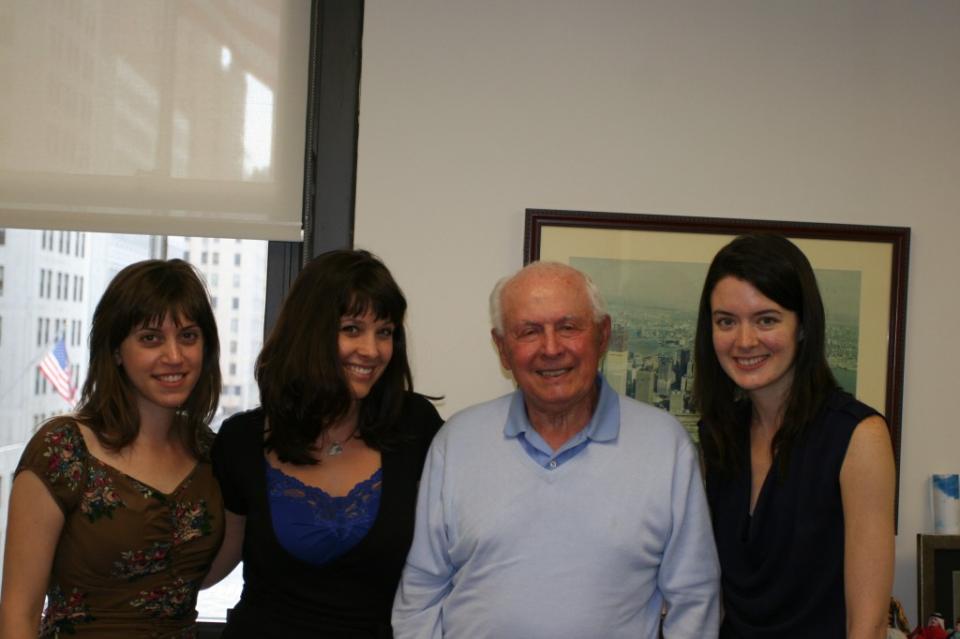
The WTC's first director, Guy Tozzoli, chatted Monday with museum staff of the National September 11 Memorial & Museum. He was hired in 1962 by then-named Port Authority of New York to head the development, construction and management of the World Trade Center, a complex aimed to revitalize lower Manhattan.  He was responsible for the entire project and chose architect Minoru Yamasaki.

Yamasaki originally designed several 80-story towers for the site, but Tozzoli was persistent in increasing the design to feature twin 110-story buildings.  Tozzoli said he has the tendency to keep making things bigger, even now.

He now serves as president of the World Trade Center Association, an organization he founded in 1970 to connect countries through economic activity.  At its inception, the association had only 15 participants from 15 countries.  Today, there are 325 "World Trade Centers" in cites across 92 countries.  In 1999, Tozzoli was nominated by the South Korean and North Korean governments and was accepted as a candidate for the Nobel Peace Prize for his work.

“I like what I do,” said Tozzoli, who at the age of 88 still heads the organization.

Tozzoli oversaw the World Trade Center in New York from its construction in the 1960's until its destruction on Sept. 11, 2001.  His office was located on the 77th floor of the North tower, and he enjoyed his time working there.  "I loved it," he said.

When speaking about the towers, Tozzoli said, “Windows on the World was my favorite place,” a restaurant he hopes to see recreated in one of the future towers.

Tozzoli also joked about his relationship with Philippe Petit, the French high-wire artist who “danced” across a tightrope between the twin towers in 1974.  The pair, who are now friends, speak at public lectures together.

“It’s really fun,” said Tozzoli, who loves sharing stories like Petit's high-wire act. “They become part of you," he said, still remembering the day mountain-climber George Willig scaled the 110 stories in 1977.

On Sept. 11, Tozzoli watch the towers he built burn and collapse while he was arriving late to work from the Holland Tunnel.

“I wanted to go down and be with the people,” he recalled.  But he was turned away after showing a police officer his credentials.  "He said, 'I don't care if you're the pope.'"

Now, Tozzoli said he wants “to help people do it all over again” and he said he's “looking forward” to visiting the 9/11 Memorial when it is completed next year.

Tozzoli also hopes to still be around when the new towers are finished.  He joked, "I'm older than God."

By Meghan Walsh, Communications Associate for the 9/11 Memorial
Lower Manhattan resident captures 9/11 destruction in vivid detail

Lower Manhattan resident captures 9/11 destruction in vivid detail

Make-History-Hiro-O-Battery-Park-Ash-300x225.png

Above: Two photos depict the scene of lower Manhattan after the World Trade Center towers fell on Sept. 11.  The first photo (left) is an image of Battery Park covered in ash.  The second photo  is the scene at Battery Park Pier as many people tried to leave Manhattan via ferry boats.  (Photos by Hiro Oshima)

The above photographs, taken by New Yorker Hiro Oshima, show the images he saw when he evacuated his lower Manhattan residence on Sept. 11.  The images are now part of the National September 11 Memorial & Museum’s Make History initiative.

Make History is a collective telling of the events of 9/11 through the eyes of those who experienced it, both at the attack sites and around the world.

Oshima has contributed many of the images he captured on Sept. 11 to the Make History archive.  Oshima, who witnessed the collapse of the towers, had moved to lower Manhattan in 1999.  He used to consider Windows on the World, atop the World Trade Center, his “neighborhood bar.”

Oshima, like many others, was evacuated from his building on 9/11.  His photographs show his movement from lower Manhattan to Battery Park and then onto New Jersey.  After Sept. 11, Oshima moved in with his college roommate in the East Village.  It wasn’t until December that his building was accessible.

The Make History archive currently contains more than 1,000 photographs and 300 stories.  Visitors to the site can upload their own pictures, videos and stories about 9/11 and the impact it had globally.

Make History has been recently recognized by an award academy that notes great achievements in the online community.

By Meghan Walsh, Communications Associate for the 9/11 Memorial
9/11 memorial construction continues moving forward

9/11 memorial construction continues moving forward

National-9.11-Memorial-August-2007-Credit-Joe-Woolhead-711-300x200.jpg

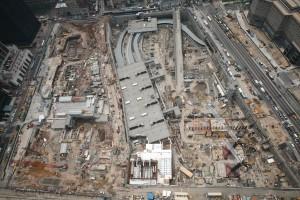
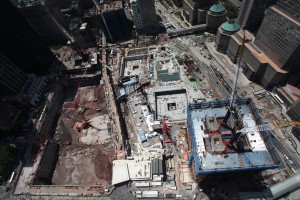
Above: Two photographs show the ongoing construction of the 9/11 Memorial with the first (left) displaying the beginning steps of reconstruction at the World Trade Center site in 2007, while the second photo shows the site as it looks today.  (Photos by Joe Woolhead)

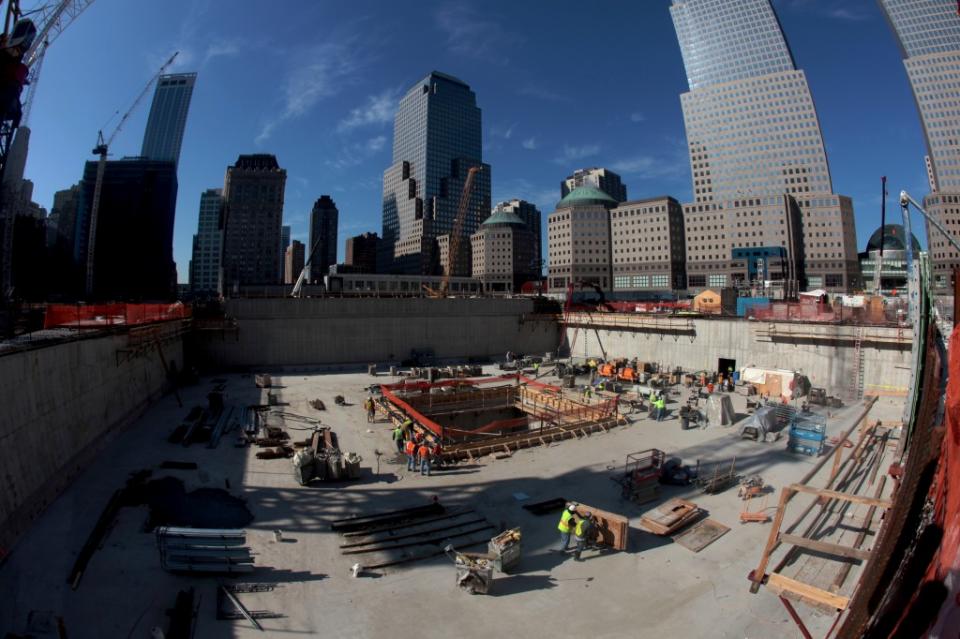
Since construction officially began on the National September 11 Memorial and Museum in 2006, the World Trade Center site has transformed.

Where one used to see mostly mounds of dirt and tons of construction equipment, now two structurally defined Memorial pools are visible along with construction on One World Trade Center, the skyscraper commonly known as the Freedom Tower.

The photograph on the left, above, shows an aerial view of 9/11 Memorial construction in August 2007.  At that time, 580 metric tons of jumbo steel l-beams, to be used for the memorial and museum, had just arrived at the Port of Savannah, Ga., after a 4,000-mile journey from Luxembourg in central Europe.  The steel didn’t officially arrive on site until later that year.  More than 8,000 tons of steel are being used to construct the 9/11 Memorial and 100 percent of the steel has since been installed at the site.

The photograph on the right, taken last month by resident photographer Joe Woolhead, shows the highly anticipated construction of the North and South memorial pools, where dark granite panels are currently being placed.  The pools are about an acre in size, and they are situated within the footprints of the original towers.  Ten large pumps will create 40 pounds of pressure to circulate 52,000 gallons of water per minute for the artificial waterfalls.  These will be the largest man-made waterfalls in the country.

The 9/11 Memorial will open Sept. 11, 2011.

By Meghan Walsh, Communications Associate for the 9/11 Memorial
rsvp now to hear NYT reporter discuss escape from the taliban in the 9/11 speaker series tomorrow

rsvp now to hear NYT reporter discuss escape from the taliban in the 9/11 speaker series tomorrow

speaker-series-banner_0.jpg

The asking price for David Rohde's release was $25 million.

Tomorrow evening, two-time Pulitzer prize winner Rohde will discuss his seven-month captivity with the Taliban as part of the "9/11, Today and Tomorrow" Speakers Series.  The New York Times reporter is set to talk about the Taliban mini-state currently training suicide attackers and roadside bomb-makers who kill Afghan, American and Pakistani soldiers.

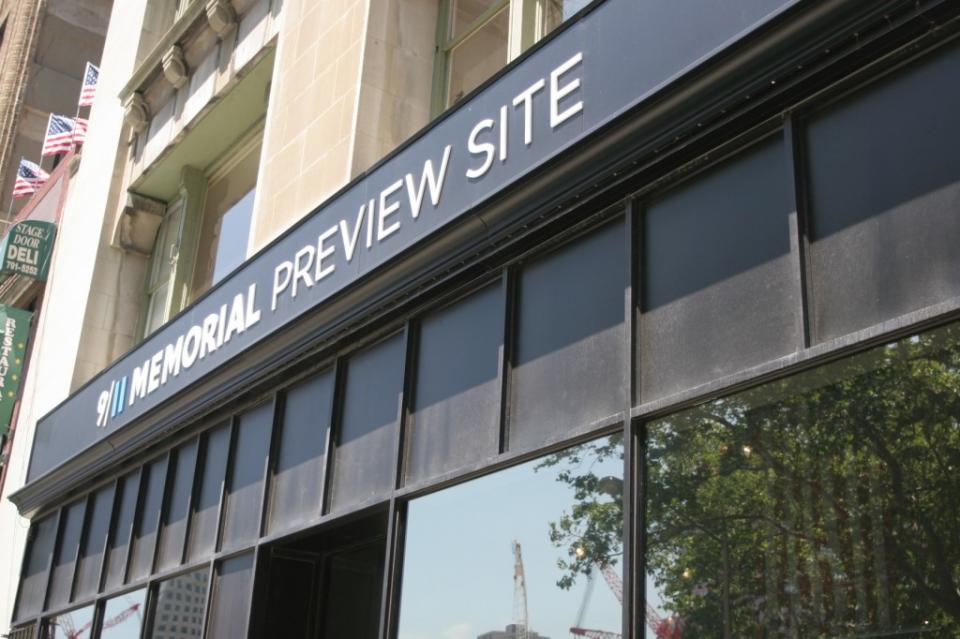
The "Escaping the Taliban" event featuring Rohde is Wednesday, June 23 at 6:30 p.m. at the 9/11 Memorial Preview Site, 20 Vesey St.  Doors open at 6 p.m.

Rohde has covered conflicts in Afghanistan, Bosnia and many other countries. From November 2008 to June 2009, he was held captive by the Taliban until his eventual escape. He is also the co-author of the forthcoming book “A Rope and A Prayer: The Story of A Kidnapping.”  A five-part series that Rohde wrote on his captivity and escape for The New York Times was recently awarded the 2009 George Polk Award for foreign reporting.

Due to space limitations, RSVP is recommended to guarantee a seat up to 15 minutes before programming begins.  A suggested donation of $10 per person will help support ongoing programming.

By Meghan Walsh, Communications Associate for the 9/11 Memorial
Collection highlights aftermath of 9/11 attacks

Collection highlights aftermath of 9/11 attacks

IMG_3830-1024x682.jpg


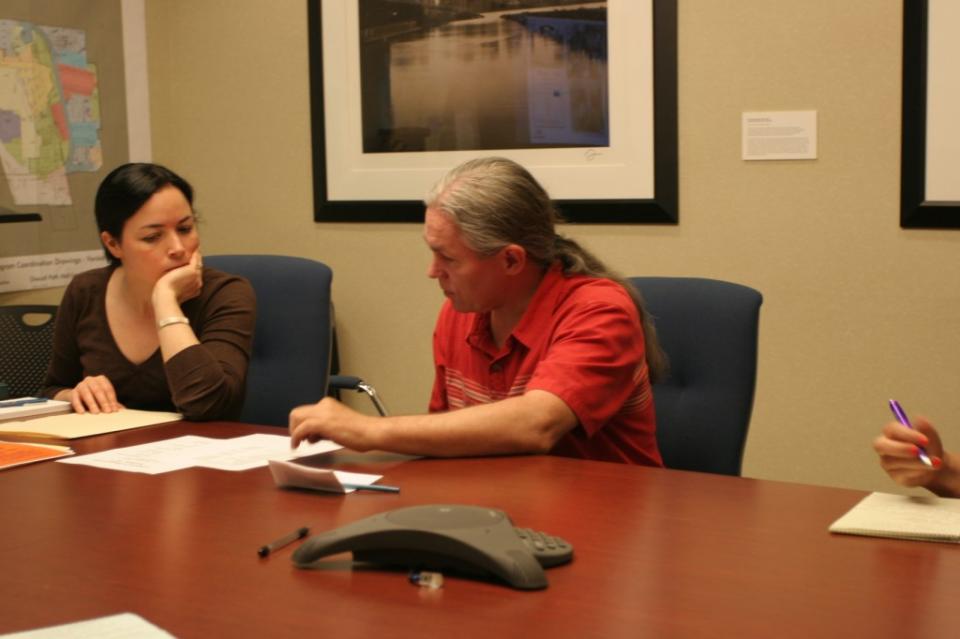
Above: Michael Ragsdale discusses pieces of his collection with 9/11 Memorial Museum exhibition researcher Liz Mazucci. (Photo by Michael Frazier)


After watching the Sept. 11 attacks unfold, Michael Ragsdale started a personal campaign to collect fliers, cards and brochures that marked the day’s events and the subsequent months.

“I decided to collect stuff that I felt would be ignored,” he said.

Seeing the North Tower on fire, Ragsdale said he knew something unprecedented was happening and sensed the towers may not exist much longer.  He quickly went down to the site, feeling compelled to grab any memorabilia.  He took a couple hundred World Trade Center brochures shortly before the towers fell.

Ragsdale, who has been an autograph collector since 1997, began collecting this 9/11 ephemera over the 14 months following the attacks.

“I had the opportunity to do it, so I did it,” he said.


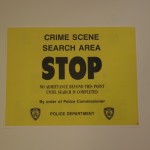
Ragsdale collected pieces such as event fliers that organizations handed out on the streets.  One flier read: “Protest Fire Bombings Against Arab Stores."  He also collected warning signs posted around ground zero and the World Trade Center site, including one that said, “Crime Scene Search Area: Stop."

He said the most shocking piece he collected was a sign he got from around ground zero that read “Warning: Poison.”

Ragsdale's ephemera collection was acquired by the National September 11 Memorial & Museum for display in future exhibitions. The collection has more than 4,100 pieces.  These collected items are to become part of the showcases highlighting the aftermath of the attacks.

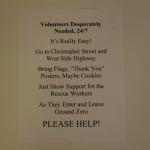
Image A: A flier posted by the New York City Police Department near ground zero, indicating "Crime Scene Search Area STOP".  Image B: A flier that was handed out asking for volunteers to show support for ground zero rescue workers.

By Meghan Walsh, Communications Associate with the 9/11 Memorial

People make history by capturing 9/11 events

People make history by capturing 9/11 events

Make-History-Zerneki-MEMO1.png

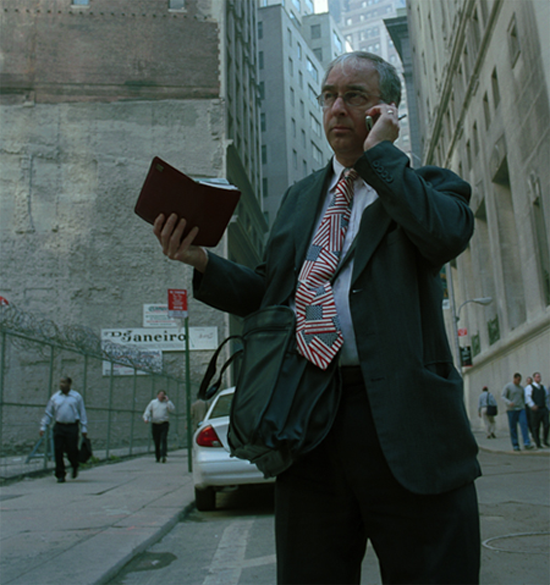
This photo, taken of a man making a call the first day the New York Stock Exchange opened after the Sept. 11 attacks, was captured by Harry Zernike. It can now be viewed through the National September 11 Memorial & Museum’s Make History initiative.

Following the events of 9/11, major communication lines in lower Manhattan were down, making it impossible for business to run as usual.  The New York Stock Exchange reopened September 17 after almost a week of inactivity, as did many other downtown businesses.

Make History is a collective telling of the events of 9/11 through the eyes of those who experienced it, both at the attack sites and around the world.  The archive currently contains more than 1,000 photographs and 300 stories.  Visitors to the site can upload their own pictures, videos and stories about 9/11 events and the impact it had globally.

Make History has been recently recognized by an award academy that notes great achievements in the online community.

By Meghan Walsh, Communications Associate with the 9/11 Memorial

behind the lense: the man photographing the world trade center site

behind the lense: the man photographing the world trade center site

National-9.11-Memorial-March-2010-Credit-Joe-Woolhead-35-1024x682.jpg

Since construction began on the National September 11 Memorial & Museum, there’s been one man who’s seen every angle, view and development.

Joe Woolhead, the photographer capturing the World Trade Center site and memorial and museum’s construction, is working together with Silverstein Properties to document the progress.

Born and raised in Dublin, Woolhead now works and lives in New York City with his wife and son.  He became a professional photographer on Sept. 11 after capturing the events of that day and the subsequent days.  His shots were published all over the world.  The event led to many more opportunities for Woolhead, including work with the premier photography agency, Sipa Press.

In May 2004, Woolhead began to work with Silverstein Properties.  Now, he works at the World Trade Center site photographing the ongoing construction.  Due to his work at the site, Woolhead has invested more of his time in architectural photography.

Woolhead’s photos have been featured in The New York Times, Time, Town & Country, Esquire, Gotham, New York Post, Daily News, and Wall Street Journal, along with many other national and international publications.

To access more information about Joe Woolhead and his photography, you can visit http://www.joewoolhead.com/.

By Meghan Walsh, Communications Associate with the 9/11 Memorial

9/11 Memorial Preview Site attracts visitors from around the world

9/11 Memorial Preview Site attracts visitors from around the world

IMG_3820-1024x682.jpg

Travelers across the United States and globe are coming to visit the 9/11 Memorial Preview Site, 20 Vesey St.

“It’s part of the New York story and the world story,” said Arturo Cuenca speaking on the events of Sept. 11.  Cuenca, from Spain's Basque Country, stopped by the site June 15 during his first visit to New York City.

The Preview Site was established to show the public the plans and progress of the National September 11 Memorial & Museum currently being built at the World Trade Center site.

Pam Henry, a kindergarten teacher at the time of the Sept. 11 events, came to visit the Preview Site for her first time.  A current resident of Austin, Texas, she lived in New York City years before 9/11. “Having lived here, I felt some connection . . . this could be an important part of the healing process," she said.For some visitors, the Preview Site is a saddening reminder.“I look at the pictures, and I’m finished,” said Klaus Lachner, on holiday from his home country Germany.  He described his emotions in one word, saying he felt “down.”Andrew Graham, a resident of Queensland, Australia, has been living in New York City with his wife for 18 months.  He came to the site because “it was bringing it home.”  He said the events of Sept. 11 “could happen anywhere . . . I felt sorry for Americans.”At the Preview Site, people can view real time images of the construction and participate in the creation of the 9/11 Memorial Museum by sharing their own Sept. 11 stories.


By Meghan Walsh, Communications Associate with the 9/11 Memorial

your vote today can help the 9/11 memorial pay tribute to the thousands of lives lost

your vote today can help the 9/11 memorial pay tribute to the thousands of lives lost

911TakePart2-e1276182400238.jpg

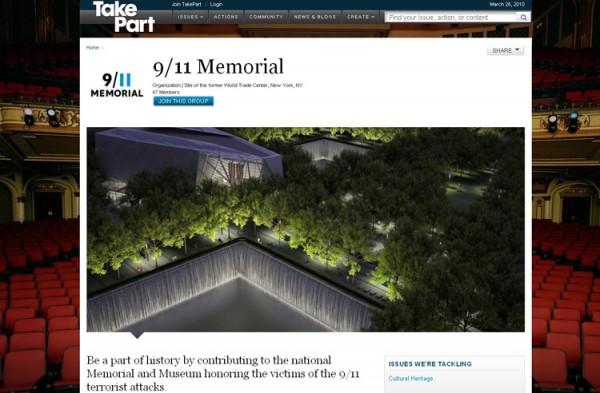
The National September 11 Memorial & Museum continues to be a candidate for funding from American Express through the Members Project, a partnership between American Express and TakePart to help people everywhere support charitable organizations.

Help make us one of five charities that will share a total of $1,000,000 in funding from American Express. The funding will help us better fulfill our mission, and it takes just a mouse-click each week to help us win this vital support to build a national tribute to the thousands lost after Sept. 11.

If you haven’t already, all you have to do is join Members Project, and cast a vote for us each week. After the three-month voting period is complete, Members Project will tally the votes and announce the winners for the voting round. Help us be a part of that list.  To join Members Project and to cast your votes, click here.

You can also help us in other ways. Get involved with us by volunteering or making a donation through Members Project. Your time and contribution can make a big impact. Everyone can make a difference. It takes just a small step to begin.

By Meghan Walsh, Communications Associate with the 9/11 Memorial

Subscribe to