Remembering WTC Window Washer Roko Camaj

Remembering WTC Window Washer Roko Camaj

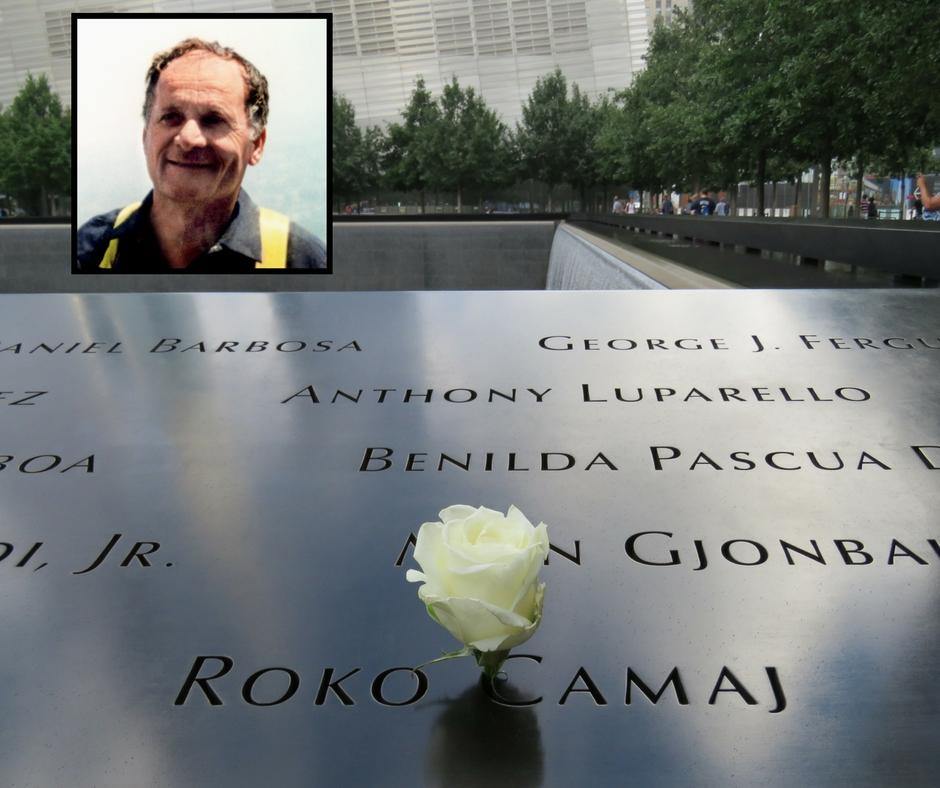
A white rose has been placed at the name of Roko Camaj at the 9/11 Memorial. An inset image of Camaj is at the top left of the image.
White rose left for Roko Camaj on his birthday at the 9/11 Memorial. Photo by staff.

Roko Camaj spent nearly half of his life suspended from ropes over 1,300 feet above ground working outside of the original World Trade Center. Born in the small Balkan country of Montenegro, he immigrated to the United States in 1969 and began working at the WTC as a window washer with ABM Industries in 1973. Today, a white rose placed in his name on the bronze parapets at the 9/11 Memorial marks what would have been his 75th birthday. 

Most of the 43,600 windows of the WTC were cleaned using a custom-built device that crawled up and down each tower, according to the book "City in the Sky." But because the windows on the upper floors of the South Tower were made from wider panes of glass to provide expansive views from the observation deck, they needed to be washed by hand. That was Camaj's job, and he loved it.

“It’s just me and the sky. I don’t bother anybody and nobody bothers me,” Camaj said, according to a children’s book written about him called "Risky Business."

According to the New York Times, his wife, Katrina, had thought he only washed the window interiors until she read a newspaper account detailing his job. The article noted that his wife was "so unnerved by heights that, after one visit to the observation deck, she will not go near the place." He tried to change her mind, explaining he was safe in his harness and basket tethered to the skyscrapers.

He was a father of three grown children. When he wasn’t at work, Camaj was home with his wife in Manhasset, Long Island.

On the morning of Sept. 11, he called Katrina at 9:15 a.m. from the 105th floor of the South Tower where he was trapped with at least 200 other people. He also spoke to the Port Authority of New York and New Jersey operations desk via his walkie-talkie. Despite his nearly 30 years of inside knowledge of the towers, unfortunately, it was not enough to save him that morning. Camaj was killed when the tower collapsed.

By Jenny Pachucki, 9/11 Memorial Content Strategist 

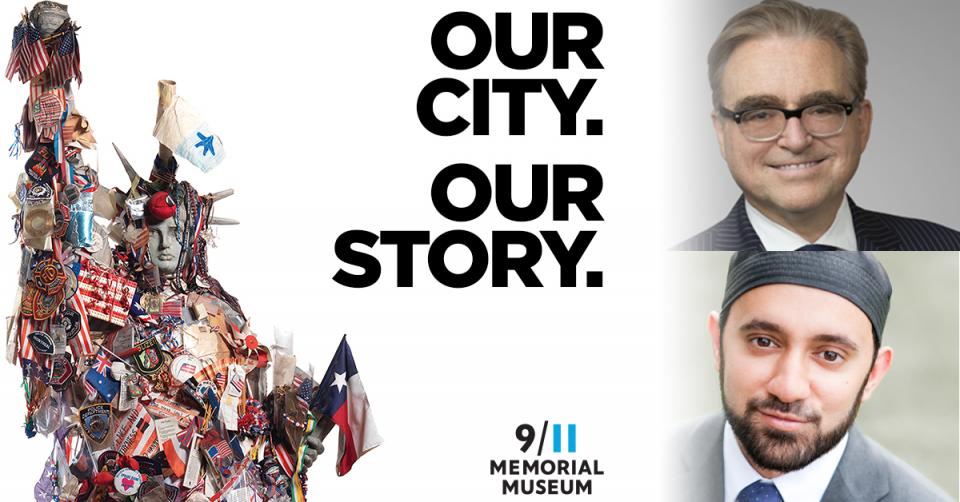
New Our City. Our Story. Podcasts Feature Imam, NY1 Reporter

New Our City. Our Story. Podcasts Feature Imam, NY1 Reporter

George Whipple and Imam Khalid Latif smile in separate portrait photos.
George Whipple and Imam Khalid Latif in the Our City. Our Story. podcast series.

This month’s new episodes in the Our City. Our Story. podcast series tell the stories of a well-known New York reporter and religious leader.

George Whipple is known as the man with the thick eyebrows who reports society news for NY1 News. When he isn’t on the red carpet, or working as an attorney in a midtown law firm, this New Yorker is working on the farm he owns in upstate New York. In Episode 9: The Eyebrow Man, Whipple discusses ways that his diverse communities came together to help revive the city and to honor the memory of those who were killed.

Imam Khalid Latif grew up in Edison, NJ as a star of his high school football team. A student at New York University when the 9/11 attacks occurred, Latif’s faith began to evolve as he assumed a leadership position in the Muslim American community that faced new challenges in the aftermath. In Episode 10: The Imam, Latif recounts this journey that led him to become the NYPD department chaplain, and the executive director of the Islamic Center for NYU.

These stories are a part of the Our City. Our Story. podcast series that highlights the experiences of New Yorkers who were impacted by Sept. 11. The series is also available on iTunes.

By 9/11 Memorial Staff

New on View: National Tribute Quilt Created in Response to 9/11

New on View: National Tribute Quilt Created in Response to 9/11

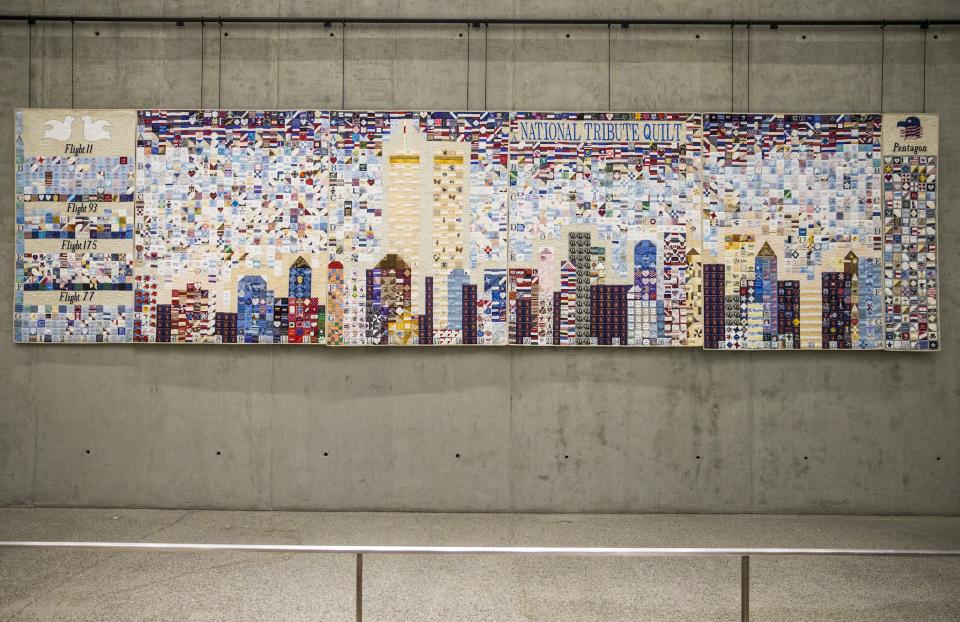
The National Tribute Quilt hangs in the 9/11 Memorial Museum’s Tribute Walk. The quilt depicts the New York City skyline, including the Twin Towers.
The National Tribute Quilt hangs in the 9/11 Memorial Museum's Tribute Walk. Photo by Jin Lee.

A 30-foot long quilt created by four women in response to 9/11 was recently donated to the 9/11 Memorial Museum and is now on view.

The National Tribute Quilt is among the new installations in the museum’s Tribute Walk, an area for large-scale works of art created in the aftermath of 9/11. The 8-foot tall quilt contains nearly 3,500 fabric squares created by people in all 50 states and five countries. Stitched together, the squares depict the New York City skyline with the Twin Towers. The quilt also represents the Pentagon and the four flights hijacked on 9/11.

Nicknamed the Steel Quilters, four Pennsylvania employees of the United States Steel Corporation, Kathy Crawford, Amber Dalley, Jian Li, and Dorothy Simback organized the creation of the quilt. Their project was partly in response to the death of another coworker’s son, Lawrence Don Kim, who was working at the World Trade Center on 9/11.

“The father’s strength and composure inspired us to make this quilt, not for just one family, but for all the families who must share in the grief,” Crawford wrote.

A native of Pittsburgh, 31-year-old Kim was a senior manager of information technology at Marsh & McLennan. He loved watching his hometown Steelers play football, and he taught himself German so he could read the untranslated writings of Freud, Heidegger, and Goethe. On 9/11, Kim was in the North Tower reporting for his second day of work.

Out of the sympathy the Steel Quilters felt for Kim’s parents, and through the compassion of hundreds of quilters, came this tribute to all 9/11’s victims.

By 9/11 Memorial Staff

9/11 Memorial Guided Tour: Through the Eyes of a Communications Intern

9/11 Memorial Guided Tour: Through the Eyes of a Communications Intern

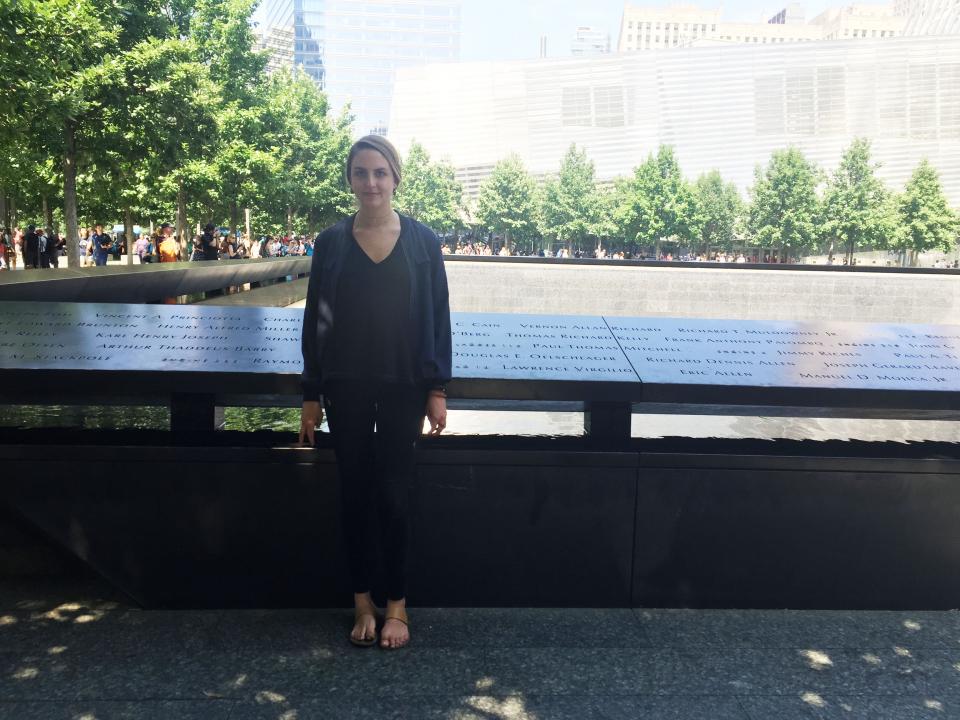
Madeline Lipton, a communications intern, poses for a photo on the 9/11 Memorial Plaza.
Madeline Lipton, communications intern, on the 9/11 Memorial plaza. Photo by Hannah Foley.

Editor’s note: This is the second in a two-part series. To get better acquainted with the 9/11 Memorial Museum, two of our interns signed up for both a guided museum and memorial tour. Having a guide gave them a new perspective and insight into the significance and history behind the artifacts.

Working at the 9/11 Memorial Museum as a communications intern has been an insightful and unique experience. In the fall, I will be entering my senior year at Colby College, where I am majoring in global studies with a concentration in Latin America and minoring in anthropology.

Here are 10 of my takeaways from participating in a guided memorial tour:

1. International design competition: A design competition was held in 2003 for a national memorial to honor the victims killed in the Sept. 11, 2001 and Feb. 26, 1993 attacks on the World Trade Center. Submissions were received from 63 countries and 49 states.

2. Footprints: The two memorial pools are built in the footprints of the Twin Towers, but the exact perimeter of the towers align with the closest set of trees surrounding the pools.

3. The parapets: The names of all the victims of Sept. 11 and the 1993 attack are etched in the bronze parapets, leaving a void to express the absence of lives taken too soon.

4. Impact zones: Some were able to escape from above the impact zone in the south tower, while the plane that hit the north tower severed any chance of escaping from above the zone of impact.

5. Meaningful adjacencies: The arrangement of names on the memorial is based on a system of meaningful adjacencies which allow the names of friends, family and coworkers to be next to each other on the memorial. Almost all 1,200 requests for meaningful adjacencies by those close to the victims were able to be honored.

6. Pregnant women: Eleven pregnant women were killed on 9/11 in addition to one that was killed in the 1993 attack. At the request of the 1993 victim’s husband, the words “and her unborn child” are etched next to her name. This was also added to the names of the 11 other women.

7. The birthday roses: Each morning, to commemorate the birthdays of the victims, a memorial staff member places a single white rose in the names of victims on the parapets.

8. The pools: Both pools are set within the footprints of the Twin Towers of the World Trade Center. The waterfalls, which are the largest man-made in the country, are approximately 30 feet in height.

9. The Survivor Tree: The charred, 8-foot stump of a Callery pear tree was salvaged from the burning rubble of ground zero after 9/11. The tree has since been nursed back to health, and now stands tall on the memorial as a symbol of resilience, rebirth and survival. It has come to be known as the “Survivor Tree.”

10. Swamp white oaks: The 416 swamp white oak trees were each hand-selected from nurseries within a 500-mile radius of the World Trade Center site, including New York, Pennsylvania, and near Arlington County, Virginia to honor the three 9/11 attack sites.

By Madeline Lipton, Communications Intern
9/11 Museum Guided Tour: Through the Eyes of a Communications Intern

9/11 Museum Guided Tour: Through the Eyes of a Communications Intern

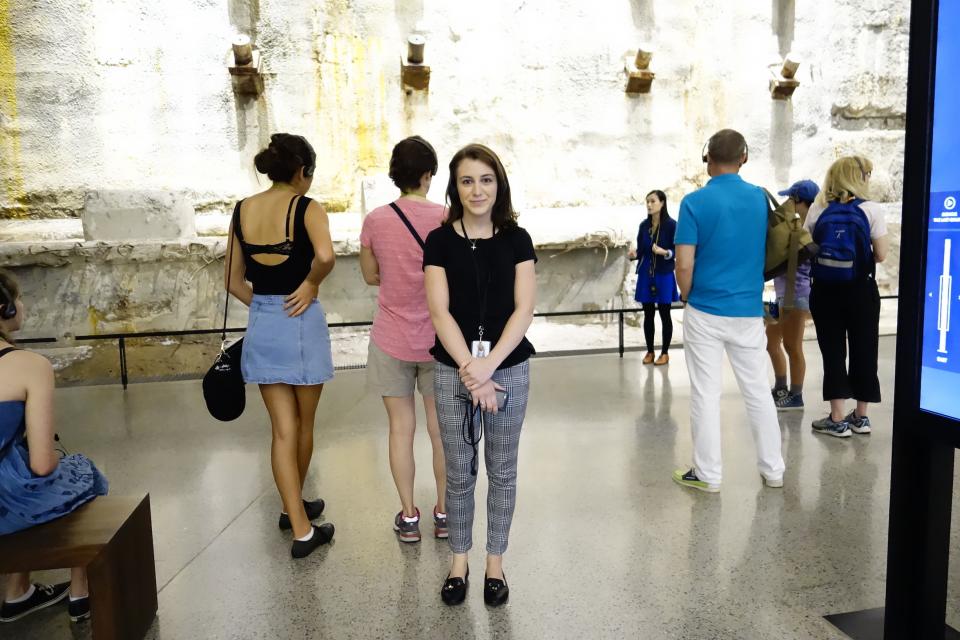
 Hannah Foley, a communications intern, poses for a photo in Foundation Hall.
Hannah Foley, communications intern, in Foundation Hall.

Editor’s note: This is the first in a two-part series. To get better acquainted with the 9/11 Memorial Museum, two of our interns signed up for both a guided museum and memorial tour. Having a guide gave them a new perspective and insight into the significance and history behind the artifacts.

On Sept. 11, I was in kindergarten in Brooklyn. I could see the Twin Towers from my classroom and can still remember running home as ash fell to the ground. That day is the first time that I remember the impact of watching the news on TV and is one of the reasons why I hope to pursue a career in broadcast journalism. I'm going into my junior year at NYU, where I'm double majoring in journalism and politics and minoring in irish studies. I feel incredibly honored to be working as one of the communications interns at the National September 11 Memorial & Museum.

Here are 10 of my takeaways from participating in a guided museum tour:

1. Authenticity of place: The museum sits below the memorial pools at bedrock, the original foundation of the North and South Towers. Remnants of the box columns that supported the towers line the floor.

2. Memorials of all sizes: As visitors descend into the museum you see not only the enormous size of the two pools, but you can also view a collection of digitized posters of missing persons—some of the first memorials after the attacks.

3. Global community of witnesses: Broadcasting allowed approximately 2 billion people—1/3 of the world's population in 2001—to watch the attacks in real time.

4. Support system: Tour guides are an excellent resource and provide you with background information and a personalized narrative as you make your way through the exhibits.

5. Accessible for all ages: The museum and tour are designed so that people of all ages will be introduced to the material and artifacts in a sensitive manner. After the tour, visitors may choose to view exhibits featuring more emotional content.

6. Every artifact tells a story: No matter how big or small, every piece represents the strength and resilience of those affected by 9/11. A fragment of the North Tower's broadcast antenna tells the story of broadcast engineers who worked up until the building's collapse to keep the signal strong enough to communicate with emergency crews below.

7. New York's finest and bravest: First responders worked tirelessly to help people at the World Trade Center. Of the 17,400 people inside the towers that morning, roughly 15,200 were evacuated safely.

8. Sacred ground: A repository for the remains of 9/11 victims under the jurisdiction of the City's Chief Medical Examiner is located at bedrock. The repository is separate from the public space of the 9/11 Memorial Museum, and is only accessible by the examiner's staff. Approximately 40 percent of families never received their loved ones' remains. This area serves as a temporary resting place for those who are unidentified until DNA technology improves.

9. The lives they led: The museum is committed to remembering not just how the victims of 9/11 lost their lives, but how they lived them too. The memorial exhibition features photos and recorded stories from family and friends.

10. Living history: The museum is far from static. Every day 9/11-related articles and reports are projected in the museum and new artifacts are donated and put on display. Sept. 11 was not the end of a story, it was just the beginning.

By Hannah Foley, Communications Intern

A Look at the 9/11 Memorials Registry

A Look at the 9/11 Memorials Registry

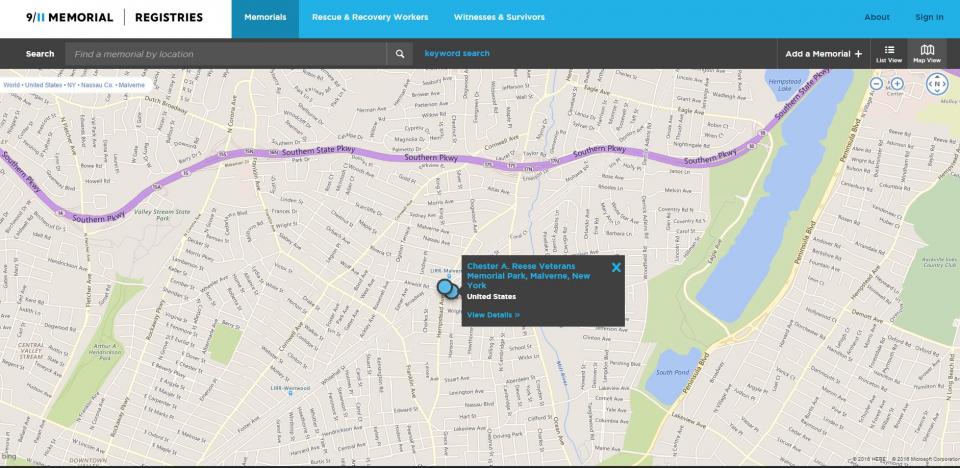
This screenshot of the 9/11 Memorials Registry shows a map of Malverne, New York, where Chester A. Reese Veterans Memorial Park is located.
Location of the Chester A. Reese Veterans Memorial Park in Malverne, New York.

The 9/11 Memorial Museum provides a variety of online registries that serve as historical records of survival, recovery and commemoration. The Memorials Registry serves as a digital record of 9/11 memorials throughout the world. Memorial profiles are added by users and highlight memorials that range from planted trees and sculptures to street signs and murals or monuments that incorporate recovered World Trade Center steel.

The registry also draws parallels to other content on view in the 9/11 Memorial Museum. A profile for a memorial in Chester A. Reese Veterans Memorial Park in Malverne, New York was recently added to the registry in honor of 9/11 victims Scott D. Bart, Jacqueline Donovan, James A. Haran, and Diane Marie Urban. This memorial features a piece of World Trade Center steel, suspended within a rectangular stone wall, as well as a commemorative bronze plaque and four benches, each dedicated to one of the town’s four victims.Courtesy of Voices of September 11th, The 9/11 Living Memorial Project

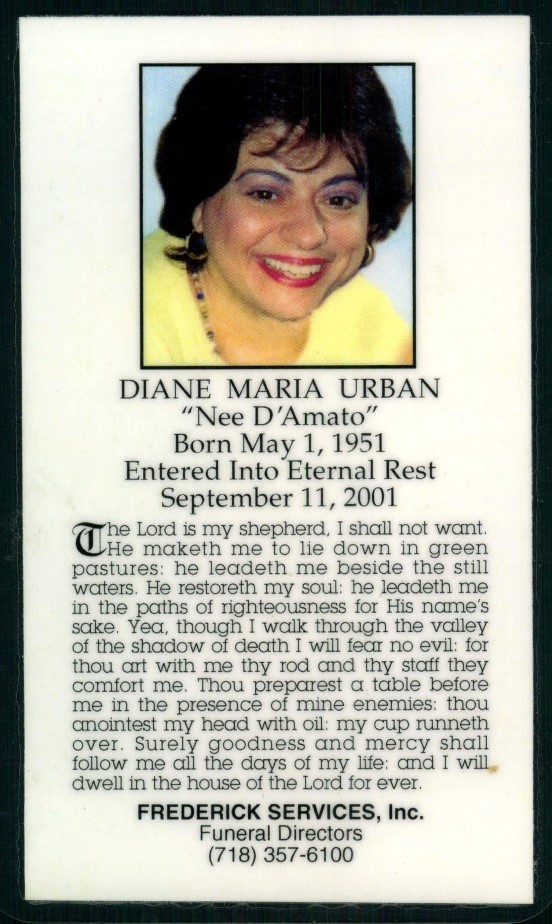
Meanwhile, within Foundation Hall, a memorial card for one of the Malverne victims, Diane Urban, is situated on the Last Column―the last piece of Twin Tower steel to be removed from ground zero, symbolically signifying the end of the recovery period. In 2002, Urban’s sister, Theresa Corio, brought this memorial card to ground zero, where recovery worker Bobby Gray adhered it to the Last Column in tribute. While the Malverne memorial relates Urban to her home, the memorial card and its placement on the Last Column connect her to the story of the World Trade Center site.

The Last Column and the Chester A. Reese Veterans Memorial Park demonstrate just two of the meaningful ways victims have been commemorated in the aftermath of the attacks. The Memorials Registry is intended to continuously connect 9/11 victims to their family, friends, and communities, and ultimately to attest to the unwavering commitment, across the country and the world, to never forget.

By Lisa Barrier, 9/11 Memorial Exhibition Research Assistant

The Lens: Capturing Life and Events at the 9/11 Memorial and Museum

The Lens: Capturing Life and Events at the 9/11 Memorial and Museum

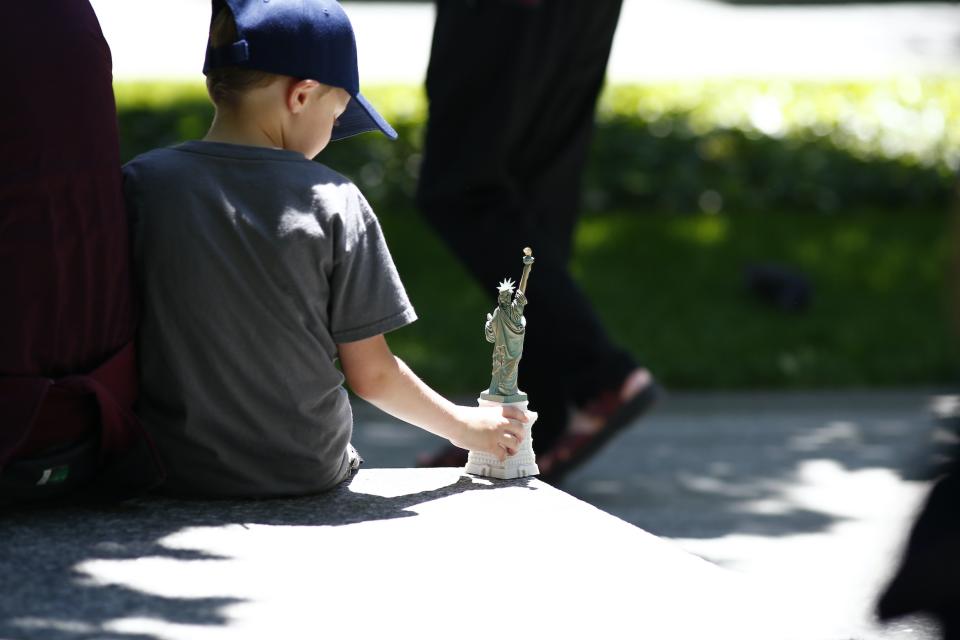
A young boy in a baseball cap plays with a toy model of the Statue of Liberty as he sits at the 9/11 Memorial.
Young visitor at the 9/11 Memorial. Photo by Jin Lee.

The Lens: Capturing Life and Events at the 9/11 Memorial and Museum is a photography series devoted to documenting moments big and small that unfold at the 9/11 Memorial and Museum.

The View: A young 9/11 Memorial visitor rests with his Statue of Liberty replica. The 9/11 Memorial and Museum is located in the heart of lower Manhattan a short distance from the Statue of Liberty and Ellis Island. 

By 9/11 Memorial Staff

New Acquisition: Frank Dammers Painting

New Acquisition: Frank Dammers Painting

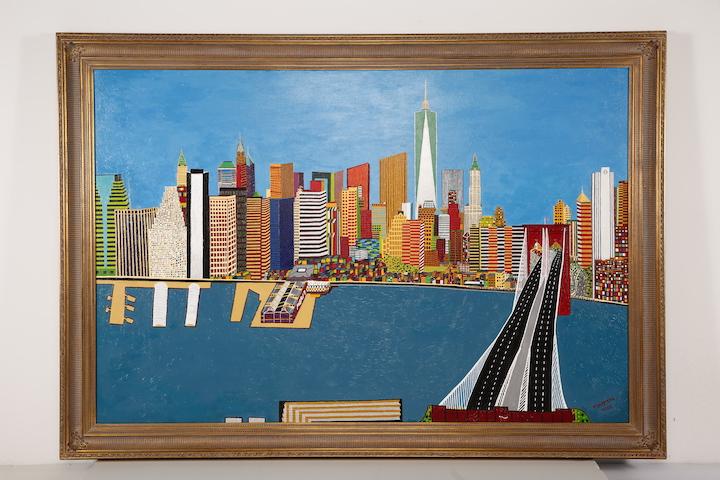
The painting “Freedom New York” by artist Frank Dammers is seen mounted on a wall. The painting depicts lower Manhattan, including Pier 17, the Brooklyn Bridge and One World Trade Center.
Freedom New York by Frank Dammers. Gift of Frank Dammers Fine Art Foundation.

The 9/11 Memorial Museum has recently acquired a Frank Dammers painting titled “Freedom New York.” Created in 2005, it evokes the New York City skyline as seen from across the East River in Brooklyn, with the new World Trade Center complex depicted before its actual construction had begun.

“The Museum collection has been enriched by the recent gift of ‘Freedom New York.’ When Frank Dammers initiated this painting, ground zero was still a depressing, colorless cavity in lower Manhattan,” 9/11 Memorial Museum Chief Curator Jan Ramirez said.  “But Dammers vaulted over that somber mood by daring to envision the return of an enlivened downtown, with a stunning, restored skyline.”

The painting celebrates the city's resilience and embraces a vision of the city risen in defiance of the 2001 terrorist attacks.    

Dammers began painting in response to a series of life altering traumatic events. the artist began to explore the theme of 9/11 in his artwork in 2004 after he met a group of 9/11 survivors, and a first responder who lost some of his colleagues while on vacation. He identified with the emotional struggle that comes with rebuilding one’s life after a traumatic experience and became inspired to explore these deeply personal feelings through his art, with a positive emphasis on the attainability of overcoming hardship. 

Dammers style is reminiscent of Piet Mondrian and Paul Klee in its geometric abstraction and bold palette. “He organizes his areas of color to the point that they form an image that is as true to the strictures of actual perception as to the unbridled imagination of the artist and his fervor for viewing reality in a positive and constructive manner,” Dutch art critic Wim van der Beek said on Dammer’s website.

By 9/11 Memorial Staff

Flag at Half-Staff in Observance of Orlando Victims

Flag at Half-Staff in Observance of Orlando Victims

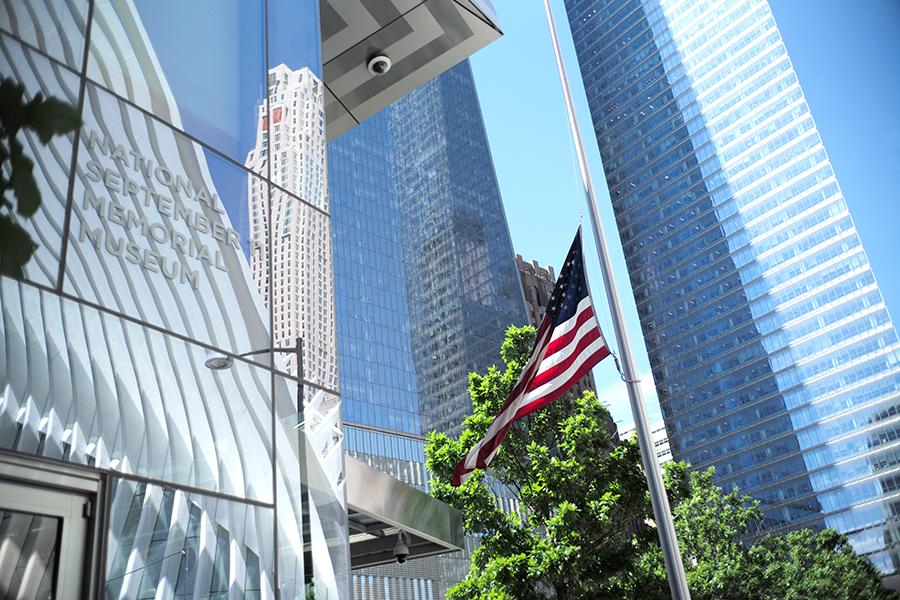
An American flag flies at half-staff outside the 9/11 Memorial Museum in observance of the victims of the Pulse nightclub shooting in Orlando, Florida.
U.S. flag continues to fly at half-staff in front of the 9/11 Memorial Museum in observance of the victims of Orlando, Fla. Photo by Jin Lee.

The U.S. flag continues to fly at half-staff in front of the 9/11 Memorial Museum in observance of the victims of the mass shooting in Orlando, Fla.

President Barack Obama ordered that flags fly at half-staff at the White House and all public buildings, military posts, naval stations and vessels, until June 16 "as a mark of respect for the victims of the act of hatred and terror."

National Flag Day is today, falling on a period of national mourning.

The Lens: Capturing Life and Events at the 9/11 Memorial and Museum

The Lens: Capturing Life and Events at the 9/11 Memorial and Museum

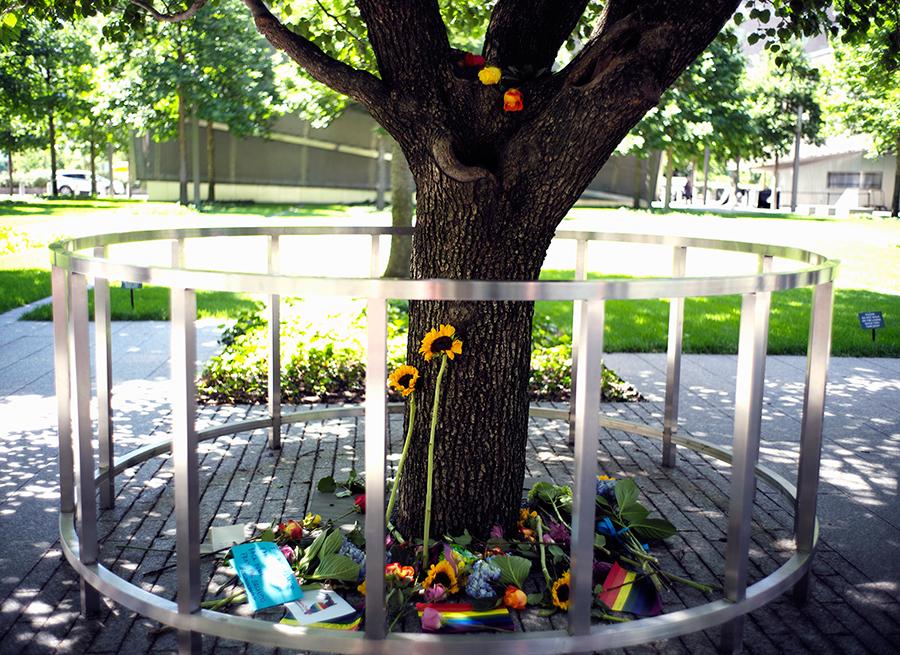
Flowers and tributes, including sunflowers and rainbow flags, have been placed at the base of the Survivor Tree on a sunny, summer day.
Flowers and tributes placed under the Survivor Tree. Photo by Jin Lee.

The Lens: Capturing Life and Events at the 9/11 Memorial and Museum is a photography series devoted to documenting moments big and small that unfold at the 9/11 Memorial and Museum.

The View: Flowers and notes are left as tributes to the victims of Sunday's Orlando, Fla. shooting under the Survivor Tree at the 9/11 Memorial.

"Terror has again left a horrific mark on our country, this time in the city of Orlando, leaving an entire community in mourning and victims' families unable to sense an ending to their heartbreak and pain. We pray for those families, the injured, the residents and the city's leadership," said 9/11 Memorial President Joe Daniels. "Maybe they cannot today, or tomorrow, but they will find strength to recover, and when they do, they will be stronger because of it, and we will be there for them."

By 9/11 Memorial Staff

Subscribe to 9/11 Memorial