9/11 Museum’s Upcoming Programs Feature ‘Homeland’ creators, Joe Torre

9/11 Museum’s Upcoming Programs Feature ‘Homeland’ creators, Joe Torre

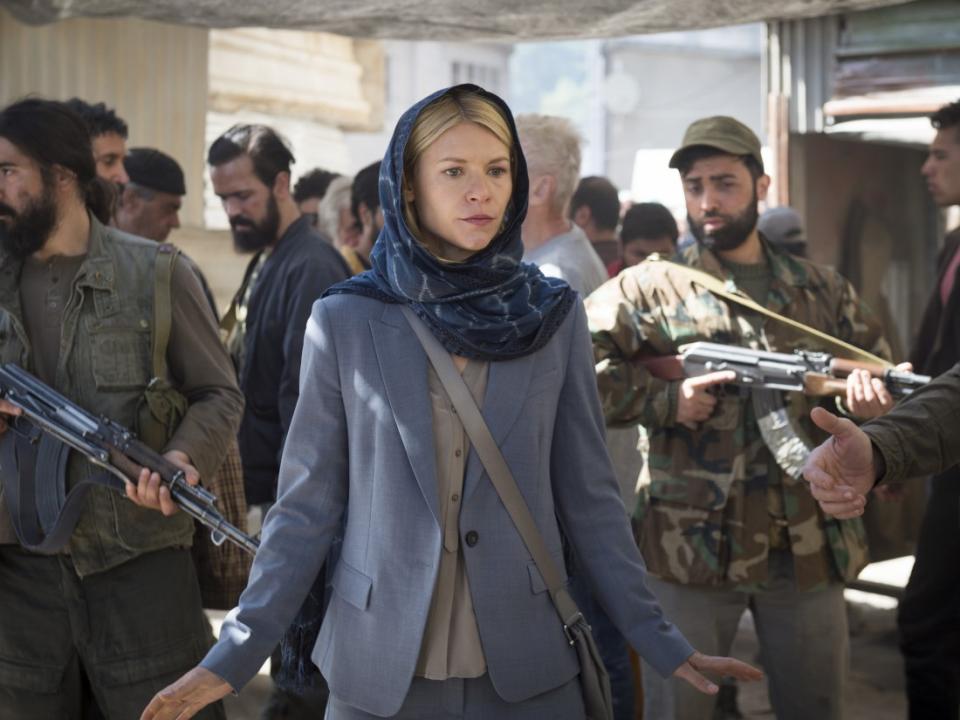
Claire Danes portrays Carrie Mathison in a scene from “Homeland.” She is wearing a blue suit and veil and is surrounded by men in camouflage holding guns.
Claire Danes as Carrie Mathison in a scene from "Homeland."

The creators of the award-winning TV series “Homeland,” Hall of Famer Joe Torre and CIA Director John Brennan headline public programs this fall at the 9/11 Memorial Museum.

The museum’s ongoing public programs cover an array of topics, including global security, foreign policy and the effect 9/11 continues to have on pop culture. The complete fall lineup includes slam poetry exploring 9/11 themes through American Sign Language and a program on how artists responded to the terror strikes. The latter is connected to the Sept. 12 opening of the special exhibition titled “Rendering the Unthinkable: Artists Respond to 9/11.”

The season begins Sept. 21 with “Joe Torre: Baseball after 9/11.” Torre, Major League Baseball’s chief baseball officer and Hall of Famer, will talk about getting the New York Yankees back on the field after 9/11 and the role baseball played in helping America recover.

Programs are free to the public, but registration is required. Learn more and register here.

Last season, programs at the museum included talks with former U.S. Secretary of State Henry Kissinger and John Miller, NYPD deputy commissioner of intelligence and counterterrorism, who in 1998 for ABC News interviewed Osama bin Laden in Afghanistan.

By 9/11 Memorial Staff

9/11 Family Member Reflects on Volunteer Experience

9/11 Family Member Reflects on Volunteer Experience

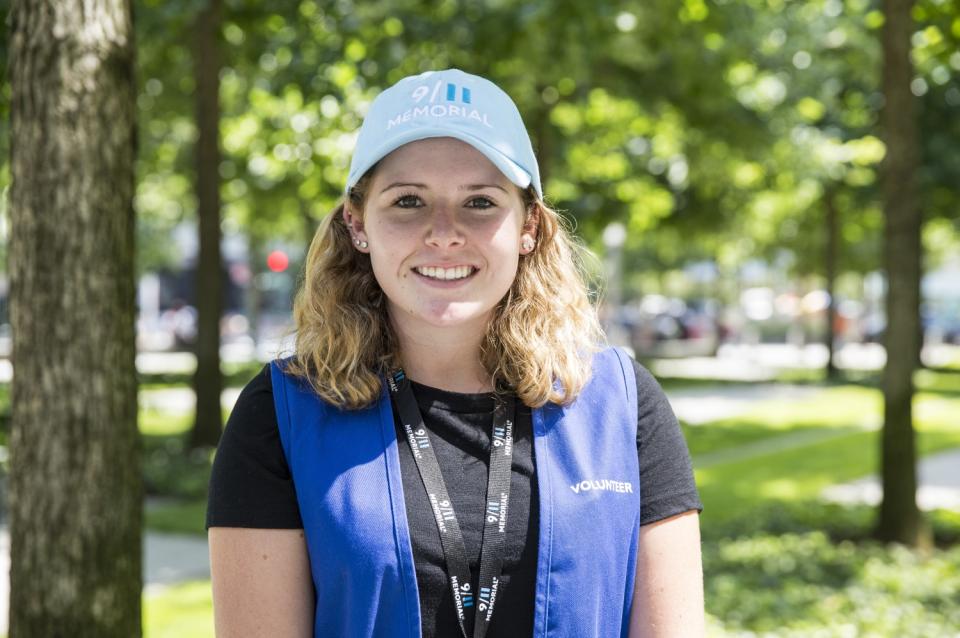
9/11 family member and volunteer Rose Fay smiles in her volunteer outfit during a sunny day on Memorial plaza.
Photo of Rose Fay on the Memorial plaza. Photo by Jin Lee.

As a family member of a firefighter who lost his life on 9/11, I've had close ties with the 9/11 Memorial and Museum and have seen the outstanding effort put forth by each employee and volunteer to make every visitor comfortable with being in such a sensitive place.

Wanting to give that experience to visitors I encounter, I felt encouraged to volunteer this summer. I heard about the opportunity through a friend and immediately signed up.

I've experienced nothing but warmth and compassion at the memorial and museum, from wonderful coworkers to enthusiastic visitors. Each person was eager to learn something new each day, whether about 9/11 or about another person. The caring attitude starts immediately at the morning meeting and is spread to each visitor.

Of the many experiences I've had volunteering, my favorite has been when a man walked up to me and started sharing his story. The trust that this man put in me simply because I wore a blue volunteer vest felt incredible. The events of his day 15 years ago were fresh in his mind as if it occurred that morning. Seeing the emotions flow with every word, showed me the effect that 9/11 had on not only New Yorkers, but the world. I hope everyone can experience the same satisfaction from such a rare opportunity.

I attend The Bolles School in Jacksonville, Fla. and am approaching my senior year. Moving to the south has taught me that more than just New York was affected by the attacks.

The experience I've had at the memorial and museum has made me more ambitious for my future of working with charities and hopefully running my own business. I learned many lessons in the time I've volunteered and hope to use those in my future to allow me to become more experienced and successful as I attempt to run a business and help those in need.

I highly recommend this program to all high school students that are eager to learn more about the culture of New York by helping others.

By Rose Fay, 9/11 Memorial and Museum Volunteer

New Our City. Our Story. Podcasts Feature Imam, NY1 Reporter

New Our City. Our Story. Podcasts Feature Imam, NY1 Reporter

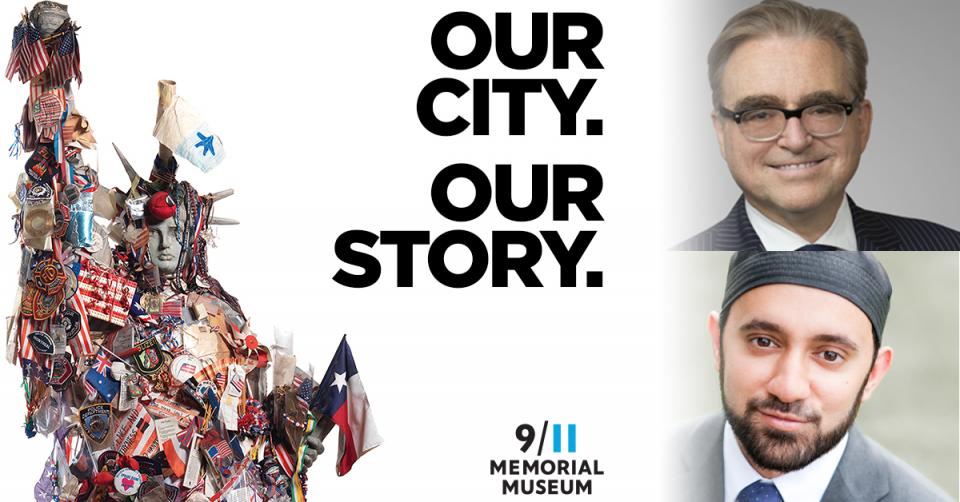
George Whipple and Imam Khalid Latif smile in separate portrait photos.
George Whipple and Imam Khalid Latif in the Our City. Our Story. podcast series.

This month’s new episodes in the Our City. Our Story. podcast series tell the stories of a well-known New York reporter and religious leader.

George Whipple is known as the man with the thick eyebrows who reports society news for NY1 News. When he isn’t on the red carpet, or working as an attorney in a midtown law firm, this New Yorker is working on the farm he owns in upstate New York. In Episode 9: The Eyebrow Man, Whipple discusses ways that his diverse communities came together to help revive the city and to honor the memory of those who were killed.

Imam Khalid Latif grew up in Edison, NJ as a star of his high school football team. A student at New York University when the 9/11 attacks occurred, Latif’s faith began to evolve as he assumed a leadership position in the Muslim American community that faced new challenges in the aftermath. In Episode 10: The Imam, Latif recounts this journey that led him to become the NYPD department chaplain, and the executive director of the Islamic Center for NYU.

These stories are a part of the Our City. Our Story. podcast series that highlights the experiences of New Yorkers who were impacted by Sept. 11. The series is also available on iTunes.

By 9/11 Memorial Staff

New on View: National Tribute Quilt Created in Response to 9/11

New on View: National Tribute Quilt Created in Response to 9/11

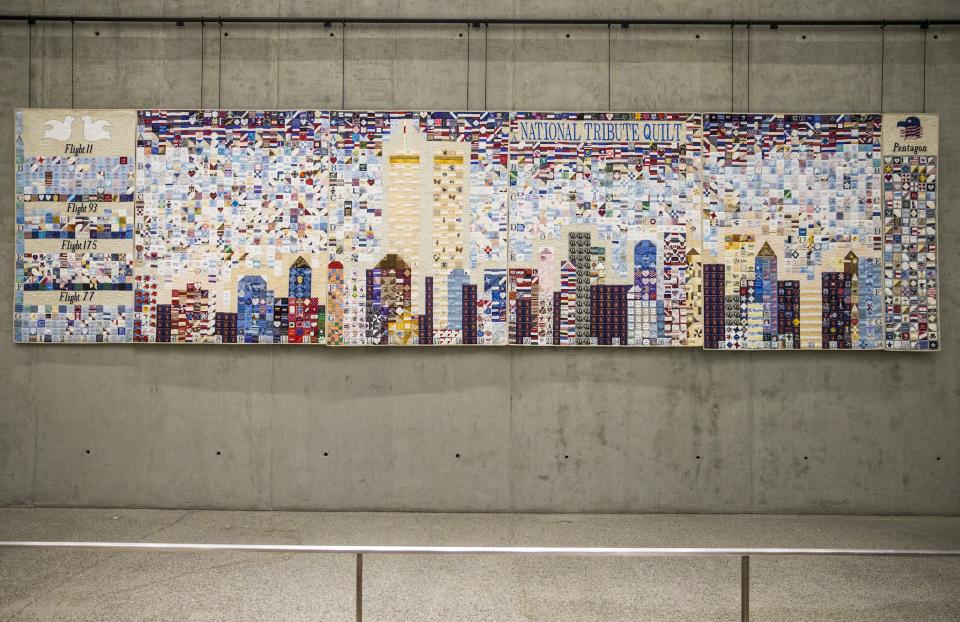
The National Tribute Quilt hangs in the 9/11 Memorial Museum’s Tribute Walk. The quilt depicts the New York City skyline, including the Twin Towers.
The National Tribute Quilt hangs in the 9/11 Memorial Museum's Tribute Walk. Photo by Jin Lee.

A 30-foot long quilt created by four women in response to 9/11 was recently donated to the 9/11 Memorial Museum and is now on view.

The National Tribute Quilt is among the new installations in the museum’s Tribute Walk, an area for large-scale works of art created in the aftermath of 9/11. The 8-foot tall quilt contains nearly 3,500 fabric squares created by people in all 50 states and five countries. Stitched together, the squares depict the New York City skyline with the Twin Towers. The quilt also represents the Pentagon and the four flights hijacked on 9/11.

Nicknamed the Steel Quilters, four Pennsylvania employees of the United States Steel Corporation, Kathy Crawford, Amber Dalley, Jian Li, and Dorothy Simback organized the creation of the quilt. Their project was partly in response to the death of another coworker’s son, Lawrence Don Kim, who was working at the World Trade Center on 9/11.

“The father’s strength and composure inspired us to make this quilt, not for just one family, but for all the families who must share in the grief,” Crawford wrote.

A native of Pittsburgh, 31-year-old Kim was a senior manager of information technology at Marsh & McLennan. He loved watching his hometown Steelers play football, and he taught himself German so he could read the untranslated writings of Freud, Heidegger, and Goethe. On 9/11, Kim was in the North Tower reporting for his second day of work.

Out of the sympathy the Steel Quilters felt for Kim’s parents, and through the compassion of hundreds of quilters, came this tribute to all 9/11’s victims.

By 9/11 Memorial Staff

9/11 Memorial Guided Tour: Through the Eyes of a Communications Intern

9/11 Memorial Guided Tour: Through the Eyes of a Communications Intern

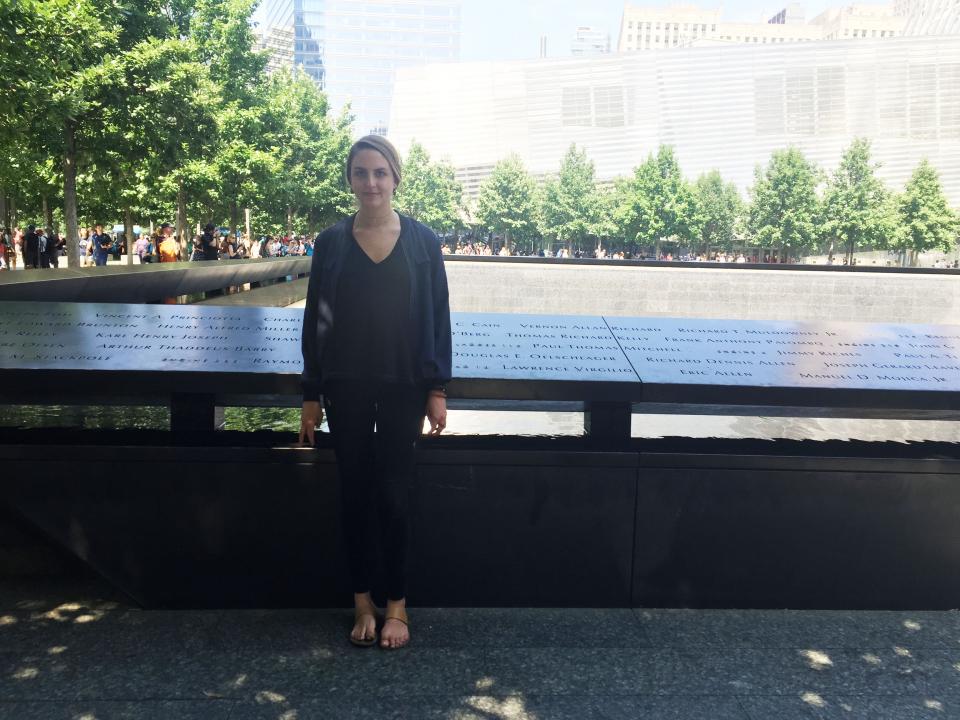
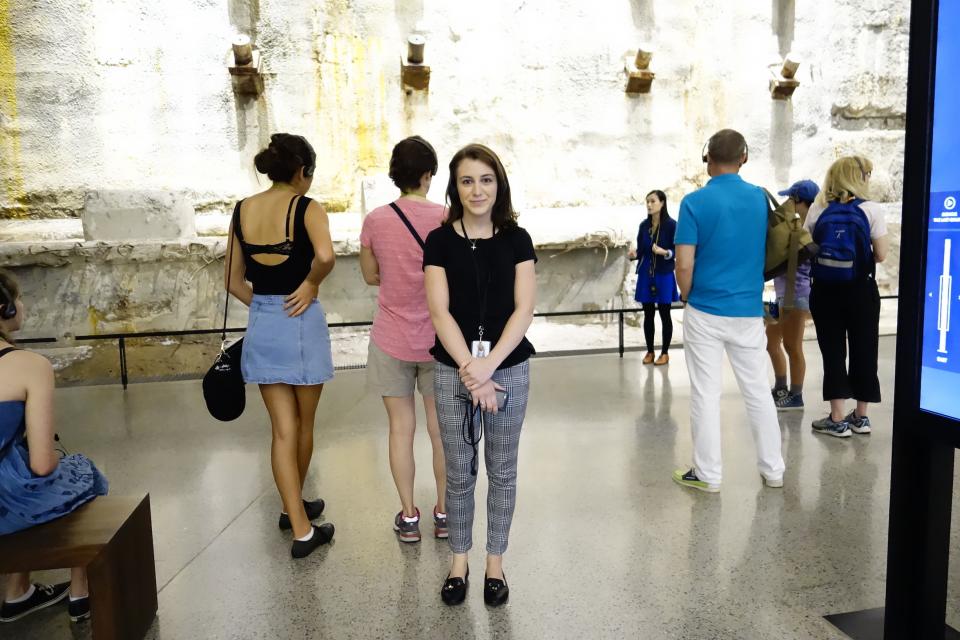
Madeline Lipton, a communications intern, poses for a photo on the 9/11 Memorial Plaza.
Madeline Lipton, communications intern, on the 9/11 Memorial plaza. Photo by Hannah Foley.

Editor’s note: This is the second in a two-part series. To get better acquainted with the 9/11 Memorial Museum, two of our interns signed up for both a guided museum and memorial tour. Having a guide gave them a new perspective and insight into the significance and history behind the artifacts.

Working at the 9/11 Memorial Museum as a communications intern has been an insightful and unique experience. In the fall, I will be entering my senior year at Colby College, where I am majoring in global studies with a concentration in Latin America and minoring in anthropology.

Here are 10 of my takeaways from participating in a guided memorial tour:

1. International design competition: A design competition was held in 2003 for a national memorial to honor the victims killed in the Sept. 11, 2001 and Feb. 26, 1993 attacks on the World Trade Center. Submissions were received from 63 countries and 49 states.

2. Footprints: The two memorial pools are built in the footprints of the Twin Towers, but the exact perimeter of the towers align with the closest set of trees surrounding the pools.

3. The parapets: The names of all the victims of Sept. 11 and the 1993 attack are etched in the bronze parapets, leaving a void to express the absence of lives taken too soon.

4. Impact zones: Some were able to escape from above the impact zone in the south tower, while the plane that hit the north tower severed any chance of escaping from above the zone of impact.

5. Meaningful adjacencies: The arrangement of names on the memorial is based on a system of meaningful adjacencies which allow the names of friends, family and coworkers to be next to each other on the memorial. Almost all 1,200 requests for meaningful adjacencies by those close to the victims were able to be honored.

6. Pregnant women: Eleven pregnant women were killed on 9/11 in addition to one that was killed in the 1993 attack. At the request of the 1993 victim’s husband, the words “and her unborn child” are etched next to her name. This was also added to the names of the 11 other women.

7. The birthday roses: Each morning, to commemorate the birthdays of the victims, a memorial staff member places a single white rose in the names of victims on the parapets.

8. The pools: Both pools are set within the footprints of the Twin Towers of the World Trade Center. The waterfalls, which are the largest man-made in the country, are approximately 30 feet in height.

9. The Survivor Tree: The charred, 8-foot stump of a Callery pear tree was salvaged from the burning rubble of ground zero after 9/11. The tree has since been nursed back to health, and now stands tall on the memorial as a symbol of resilience, rebirth and survival. It has come to be known as the “Survivor Tree.”

10. Swamp white oaks: The 416 swamp white oak trees were each hand-selected from nurseries within a 500-mile radius of the World Trade Center site, including New York, Pennsylvania, and near Arlington County, Virginia to honor the three 9/11 attack sites.

By Madeline Lipton, Communications Intern
9/11 Museum Guided Tour: Through the Eyes of a Communications Intern

9/11 Museum Guided Tour: Through the Eyes of a Communications Intern

 Hannah Foley, a communications intern, poses for a photo in Foundation Hall.
Hannah Foley, communications intern, in Foundation Hall.

Editor’s note: This is the first in a two-part series. To get better acquainted with the 9/11 Memorial Museum, two of our interns signed up for both a guided museum and memorial tour. Having a guide gave them a new perspective and insight into the significance and history behind the artifacts.

On Sept. 11, I was in kindergarten in Brooklyn. I could see the Twin Towers from my classroom and can still remember running home as ash fell to the ground. That day is the first time that I remember the impact of watching the news on TV and is one of the reasons why I hope to pursue a career in broadcast journalism. I'm going into my junior year at NYU, where I'm double majoring in journalism and politics and minoring in irish studies. I feel incredibly honored to be working as one of the communications interns at the National September 11 Memorial & Museum.

Here are 10 of my takeaways from participating in a guided museum tour:

1. Authenticity of place: The museum sits below the memorial pools at bedrock, the original foundation of the North and South Towers. Remnants of the box columns that supported the towers line the floor.

2. Memorials of all sizes: As visitors descend into the museum you see not only the enormous size of the two pools, but you can also view a collection of digitized posters of missing persons—some of the first memorials after the attacks.

3. Global community of witnesses: Broadcasting allowed approximately 2 billion people—1/3 of the world's population in 2001—to watch the attacks in real time.

4. Support system: Tour guides are an excellent resource and provide you with background information and a personalized narrative as you make your way through the exhibits.

5. Accessible for all ages: The museum and tour are designed so that people of all ages will be introduced to the material and artifacts in a sensitive manner. After the tour, visitors may choose to view exhibits featuring more emotional content.

6. Every artifact tells a story: No matter how big or small, every piece represents the strength and resilience of those affected by 9/11. A fragment of the North Tower's broadcast antenna tells the story of broadcast engineers who worked up until the building's collapse to keep the signal strong enough to communicate with emergency crews below.

7. New York's finest and bravest: First responders worked tirelessly to help people at the World Trade Center. Of the 17,400 people inside the towers that morning, roughly 15,200 were evacuated safely.

8. Sacred ground: A repository for the remains of 9/11 victims under the jurisdiction of the City's Chief Medical Examiner is located at bedrock. The repository is separate from the public space of the 9/11 Memorial Museum, and is only accessible by the examiner's staff. Approximately 40 percent of families never received their loved ones' remains. This area serves as a temporary resting place for those who are unidentified until DNA technology improves.

9. The lives they led: The museum is committed to remembering not just how the victims of 9/11 lost their lives, but how they lived them too. The memorial exhibition features photos and recorded stories from family and friends.

10. Living history: The museum is far from static. Every day 9/11-related articles and reports are projected in the museum and new artifacts are donated and put on display. Sept. 11 was not the end of a story, it was just the beginning.

By Hannah Foley, Communications Intern

The Lens: Capturing Life and Events at the 9/11 Memorial and Museum

The Lens: Capturing Life and Events at the 9/11 Memorial and Museum

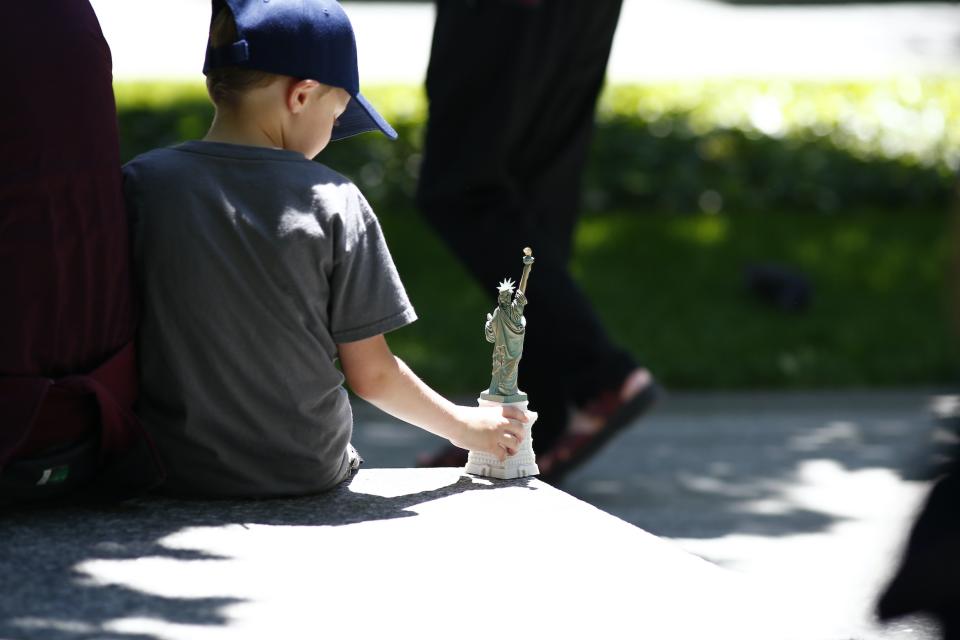
A young boy in a baseball cap plays with a toy model of the Statue of Liberty as he sits at the 9/11 Memorial.
Young visitor at the 9/11 Memorial. Photo by Jin Lee.

The Lens: Capturing Life and Events at the 9/11 Memorial and Museum is a photography series devoted to documenting moments big and small that unfold at the 9/11 Memorial and Museum.

The View: A young 9/11 Memorial visitor rests with his Statue of Liberty replica. The 9/11 Memorial and Museum is located in the heart of lower Manhattan a short distance from the Statue of Liberty and Ellis Island. 

By 9/11 Memorial Staff

Honoring the Life of David Reed Gamboa Brandhorst

Honoring the Life of David Reed Gamboa Brandhorst

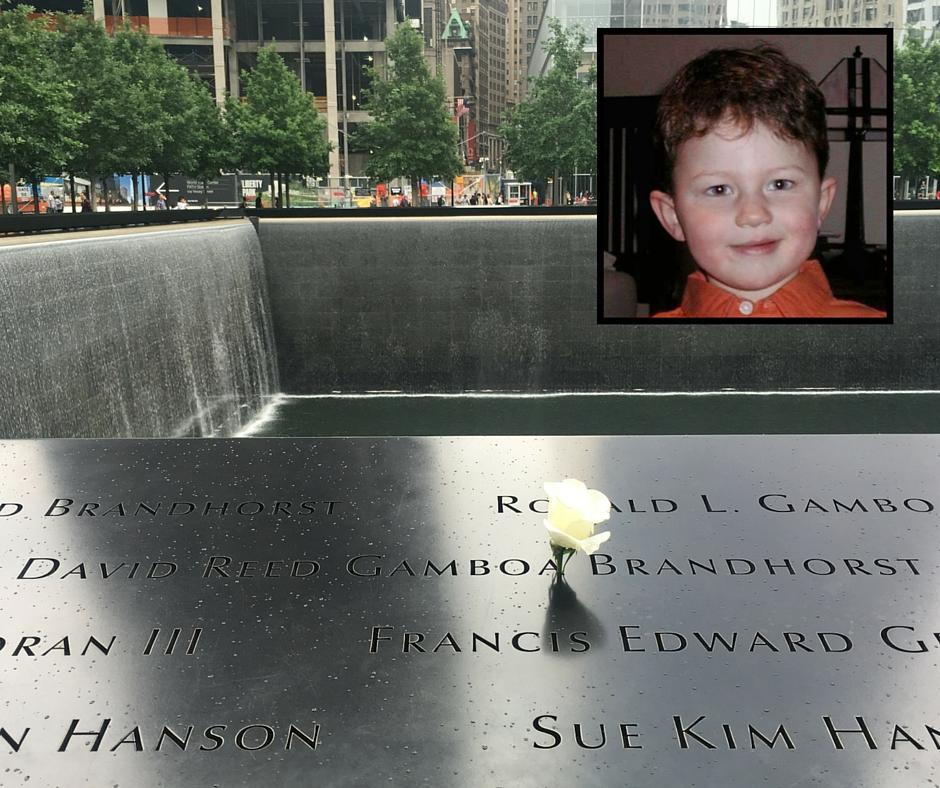
A white rose has been placed at the name of 3-year-old victim David Reed Gamboa on the 9/11 Memorial. An inset image of Gamboa is to the right of the white rose.
White rose at the 9/11 Memorial in honor of David Reed Gamboa Brandhorst. Photo by staff.

At age 3, David Reed Gamboa Brandhorst loved Legos, his cousins and attending his weekly swim class. On Sept. 11, he boarded flight 175 at Logan Airport with his fathers Daniel Brandhorst and Ronald Gamboa to return home to Los Angeles after visiting family in Cape Cod. The hijacked flight crashed into the south tower, making David one of the youngest victims of the 2001 terror attacks. Today would have been his 18th birthday. The Gamboa Brandhorst family. Denise A. Kelly in Memory of The Brandhorst Family.

Gamboa’s sister, Jeannie Merwin, remembers her nephew as a gentle and loving little boy. Following the example of his health-conscious father, she says he loved vegetables. He even opted to eat cherry tomatoes over cake and ice cream at a cousin’s birthday party.   

David called Gamboa "daddy" and Brandhorst "papa." His fathers had met at a party in 1987 and a few years later relocated from the East Coast to Los Angeles. They decided to start a family after being together for 10 years. They were in the delivery room when their adopted son, David, was born—just one day after Brandhorst’s birthday.

The two men relished fatherhood and both doted on their son. Family members say they had plans to adopt more children. The two were also founding members of the Pop Luck Club, an organization designed to give support and resources to gay dads and their families.

A playground in a West Hollywood park serves as a monument to David and his parents. The last words on the brass dedication plaque--“five more minutes Daddy!”--permanently memorialize the spirit of the fun loving toddler who loved to play there with his daddy and papa.

By Jenny Pachucki, 9/11 Memorial Content Strategist    

New on View: Artifacts Tell Stories of 9/11 Victims

New on View: Artifacts Tell Stories of 9/11 Victims

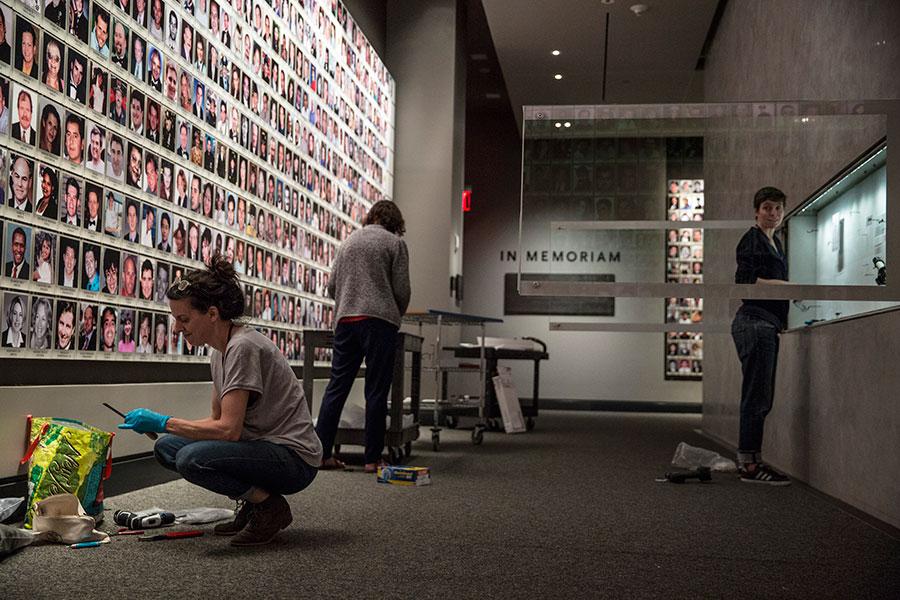
Three people install artifacts during off-hours at the 9/11 Memorial Museum. A wall featuring images of victims of the attacks towers over two women to the left.
An artifact installation takes place during off hours at the 9/11 Memorial Museum. Photo by Jin Lee.

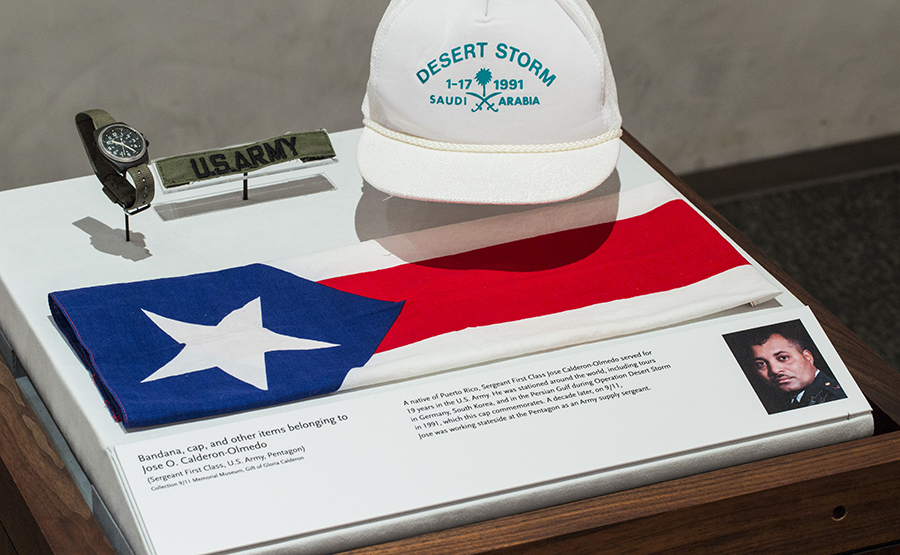
A new rotation of artifacts on view in the 9/11 Memorial Museum illustrate the lives of some of those killed on Sept. 11. The personal belongings and items provide a window into the interests and experiences of each individual they represent.

Gift of Gloria CalderónA native of Puerto Rico, U.S. Army Sgt. 1st Class Jose Calderon-Olmedo was working as a supply sergeant at the Pentagon on Sept. 11. Throughout his 19 years of service in the Army, he was stationed around the world, including tours in Germany, South Korea, and in the Persian Gulf during Operation Desert Storm in 1991. Commemorating his connection to both Puerto Rico and the United States, Calderon-Olmedo’s bandana and cap are now on view in the memorial exhibition.Gift of the Chowdhury family in memory of Shakila Yasmin & Nurul Miah
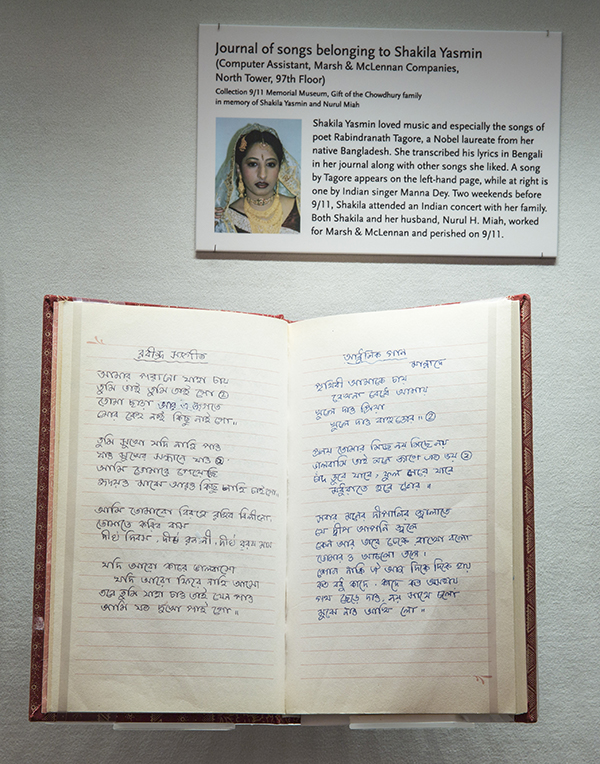
Shakila Yasmin loved the songs of poet Rabindranath Tagore, a Nobel laureate from her native Bangladesh. She transcribed his lyrics in Bengali in her journal, which is now on view. A song by Tagore appears on the left-hand page, while at right is one by Indian singer Manna Dey. Both Yasmin and her husband, Nurul H. Miah, worked for Marsh & McLennan.

Also on view is a varsity letter and Hermes pin belonging to John Perry. A lifelong runner, Perry competed on the varsity track and field team at Seaford High School on Long Island and ran three marathons as an adult. After joining the New York City Police Department in 1993, he participated in the NYPD Runners’ Club. On Sept. 11, Officer Perry was off-duty and getting his retirement paperwork together at police headquarters and ran to the World Trade Center to assist.

Artifacts of a total of 21 victims are part of this rotation. The 9/11 Memorial Museum regularly rotates personal artifacts.

By 9/11 Memorial Staff

Brooklyn School Renamed to Honor 9/11 Firefighter

Brooklyn School Renamed to Honor 9/11 Firefighter

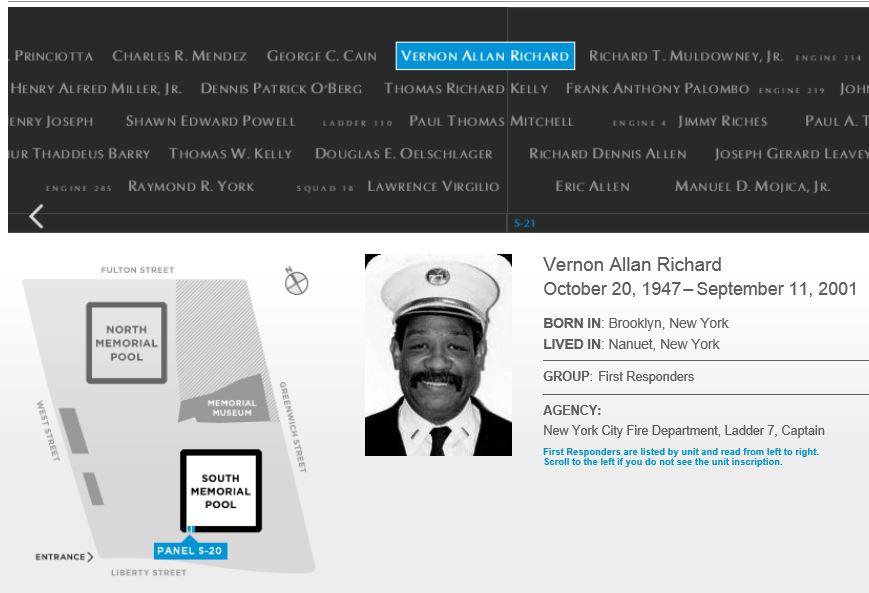
FDNY Captain Vernon Richards’ portrait and profile are seen on the Museum’s Memorial Guide.
Vernon Richard's portrait and profile on the 9/11 Memorial Guide.

A Brooklyn school will be renamed in honor of Capt. Vernon Richard, an FDNY firefighter killed on 9/11, according to the New York Daily News.

The FDNY High School in East New York will become the Capt. Vernon A. Richard HS for Fire & Life Safety. His family embarked on the journey to name a school after Richard almost 10 years ago.

A native of Brooklyn and known as a “gentle giant,” Richard began working for the FDNY in 1977 and was promoted to lieutenant in 1994. Richard was assigned to Tower Ladder 7 in Kips Bay on Sept. 11 when he was killed along with five other members of his company. The FDNY posthumously promoted him to captain.

Richard’s wife, Dorothy, received strong support from the FDNY when she “approached city officials about naming a school for her late husband.” Fire Commissioner Daniel Nigro wrote a letter to the city education department to request that Richard be given the honor of having a school named after him.

Nigro told the Daily News that it was a “fitting tribute” for the son of Brooklyn.

Family and friends announced that the school will be renamed in Richard’s honor on June 30.

By 9/11 Memorial Staff

Subscribe to 9/11 Museum