Remembering Charles S. Hirsch, Chief Medical Examiner on 9/11

Remembering Charles S. Hirsch, Chief Medical Examiner on 9/11

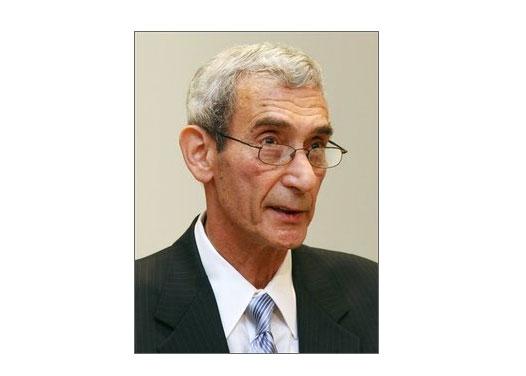
This portrait photo shows Dr. Charles Hirsch in a suit and tie.
Dr. Charles S. Hirsch. Photo courtesy of the NYC Office of Chief Medical Examiner (OCME).

Over the weekend, news spread quickly about the death of Dr. Charles S. Hirsch, 79, who served as New York City’s chief medical examiner from 1989 until his retirement in 2013. A consummate professional and public servant, Hirsch navigated thousands of bereaved family members through the awful, bewildering aftermath of 9/11. From Sept. 11 forward, he dedicated the resources of his office to the task of trying to identify the fragmented remains of nearly 2,755 victims killed at the World Trade Center. That forensic quest, which aspired to offer the certainty of proof and the rite of proper burial to relatives whose loved ones intersected with the brutal physics of 9/11, advanced the frontiers of medical technology. Regrettably, it could not provide the all-inclusive information Hirsch had hoped to deliver. At least, not yet, although the mission continues.

Throughout this endeavor, Hirsch offered the gifts of truth and compassion to mourning families. The 9/11 Memorial Museum also benefited from his wisdom. Over the years, he listened to our evolving plans, responded to our questions with facts, and counseled us with insight, patience and deep respect for our mission. We were awed by his untiring devotion to the unprecedented and complex investigation that OCME was spearheading, and by his reverence for human life.

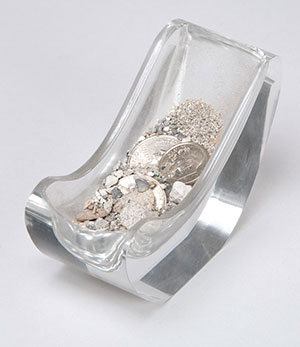
In 2012, Hirsch donated an object to the Museum collection suggestive of this dedication. Gift of Charles Hirsch. Photo by Matt Flynn. On the morning of Sept. 11, Hirsch and six of his aides raced downtown to assess the impact of what many then assumed was a catastrophic airplane accident requiring the setup of a temporary morgue. Hirsch stayed on the scene as conditions grew progressively dangerous, sustaining injuries–including broken ribs–when the North Tower collapsed. After receiving emergency medical treatment, he briefly returned to his First Avenue headquarters before heading south again to tour the ravaged 16-acre site–now referenced as ground zero. While in his office, he removed the pulverized building grit and gray ash from his jacket pocket, along with a few loose coins, and placed these contents in a favorite glass pipe rest on his desk. Until donating it to the Museum, that unusual keepsake remained in his daily sightline, as a reminder of the fate suffered by thousands caught in the vortex and the challenges his staff continued to brave in the pursuit of identifying their remains.

We will miss the profound dignity and humane wisdom of Dr. Hirsch, and offer our condolences to his family, his colleagues and countless members of the 9/11 community touched by his concern.

By Jan Ramirez, 9/11 Memorial Museum Chief Curator and Vice President of Collections

9/11 Memorial Volunteers Share Why They Give Back

9/11 Memorial Volunteers Share Why They Give Back

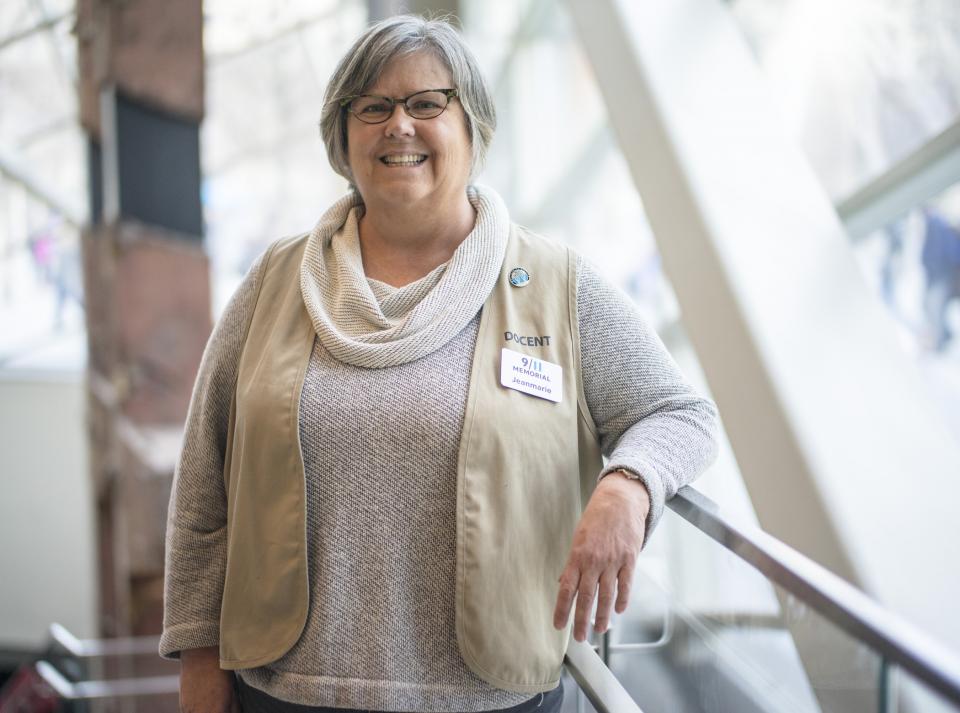
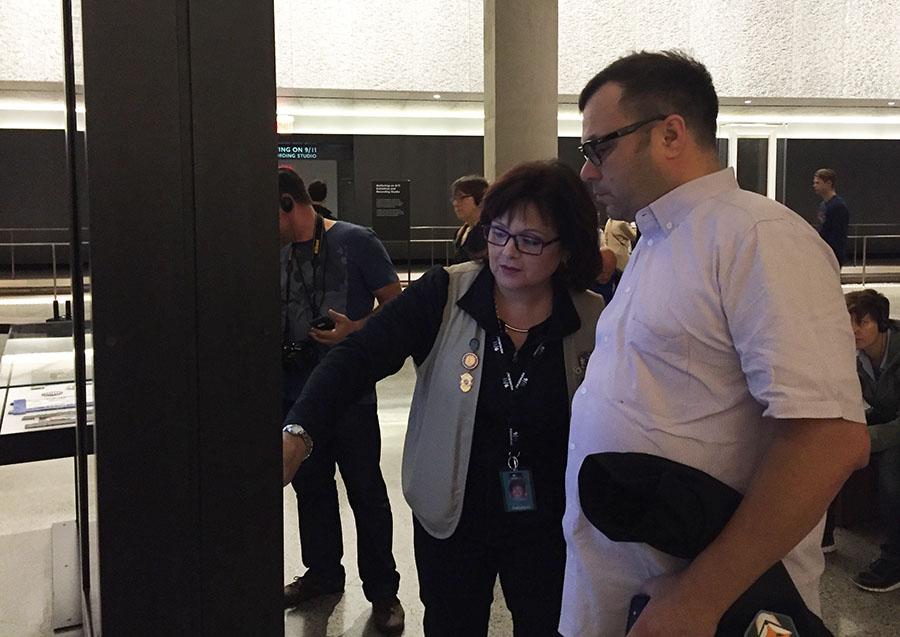
Docent Jeanmarie Hargrave poses for a photo on the ground level of the 9/11  Memorial Museum.
Docent Jeanmarie Hargrave inside the 9/11 Memorial Museum. Photo by Jin Lee.

After losing her brother T.J. Hargrave on Sept.11, volunteer Jeanmarie Hargrave has found healing in sharing the stories of that day with visitors as a 9/11 Memorial Museum docent.

"People really feel when they’re here," said Hargrave. "You know they’re leaving with something."

Joe de Blasio lost a friend in the attacks and was inspired to volunteer as a way to give back. Even educating Museum visitors about structural artifacts like the World Trade Center steel beams, he said, has brought people together and sparked meaningful conversations. 

As a docent, de Blasio has enjoyed speaking with visitors from around the world and those of his granddaughter’s generation who have no memory of the attacks. "People are really interested in why this event happened," he said.

Hargrave also has found it meaningful to interact with visitors from other countries as a volunteer. "People came from around the world to volunteer at ground zero after 9/11," she said. "There are so many beautiful stories to be told about people helping one another. It’s personal for all of us."

Melissa Narain, a criminology student at John Jay College interested in pursuing a homeland security graduate degree, decided to volunteer in visitor services after seeing a flyer at school.

"Here you can really see what our city and our people have been through, and how strong New York City has been," she said.

In recognition of National Volunteer Week from April 10 through 16, the 9/11 Memorial and Museum thanks its dedicated volunteers and encourages others to get involved. Events for current and prospective volunteers will take place throughout the week, including an opening ceremony and a recruitment table with information about volunteer opportunities.

Also this week, Museum visitors are invited to attend special live talks led by Museum docents in the auditorium weekdays at noon. Each talk will discuss the docent’s personal connection to 9/11, a Museum artifact that embodies that connection, and why he or she volunteers. The live talks are free with Museum admission.

Click here for more information about volunteering.

By Kaylee Skaar, 9/11 Memorial Communications Manager

The Lens: Capturing Life and Events at the 9/11 Memorial and Museum

The Lens: Capturing Life and Events at the 9/11 Memorial and Museum

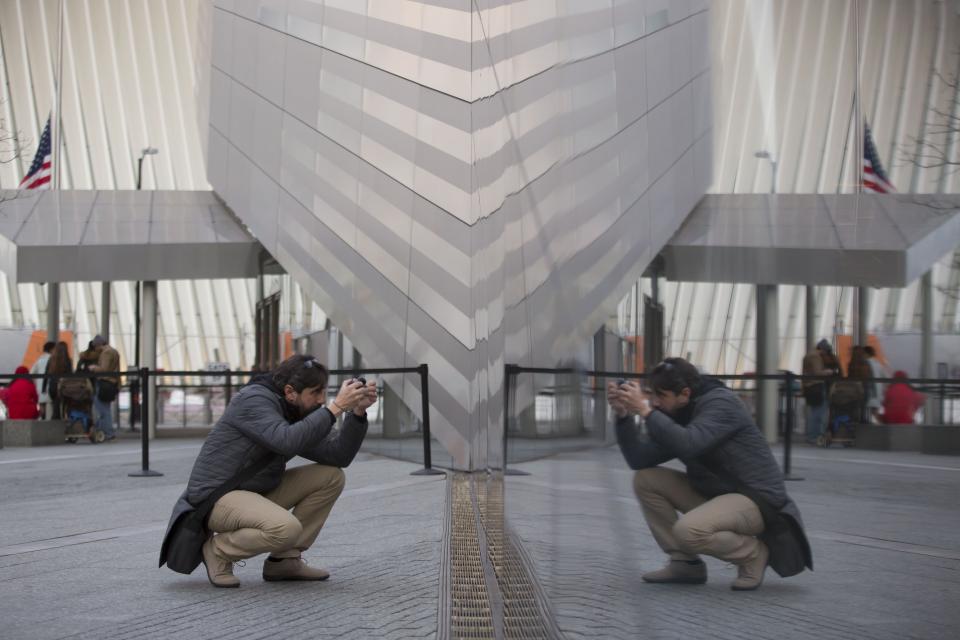
A visitor to the 9/11 Memorial Museum photographs his reflection in the glass of the Museum Pavilion.
Visitor to the 9/11 Memorial Museum photographs the museum pavilion. Photo by Ben Hider.

The Lens: Capturing Life and Events at the 9/11 Memorial and Museum is a photography series devoted to documenting moments big and small that unfold at the 9/11 Memorial and Museum.

The View: A visitor captures a photograph of the 9/11 Memorial Museum pavilion. Designed by the international architecture and design firm, Snøhetta, the pavilion is the primary entryway to the Museum. “Our desire is to allow visitors to find a place that is a naturally occurring threshold between the everyday life of the city and the uniquely spiritual quality of the Memorial. It is important that people physically engage with the building and feel that it helps lead them on to other areas of the site and other thoughts about their experiences there.,” said Craig Dykers, the founding partner architect who designed the building.

By 9/11 Memorial Staff


Bush Admin’s 9/11 Communications Show Insight on How Government Responded to Events of That Day

Bush Admin’s 9/11 Communications Show Insight on How Government Responded to Events of That Day

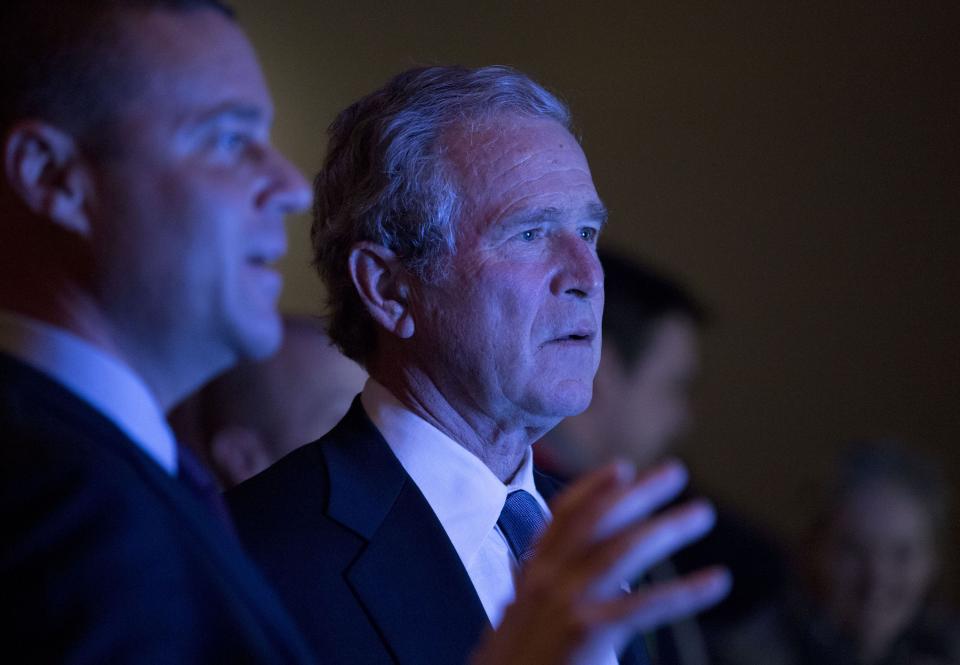
Former President George W. Bush looks at an object out of view as he visits the 9/11 Memorial Museum.
President George Bush at the 9/11 Memorial Museum. Photo by Jin Lee.

 “Unbelievable. Just got back into the White House, after having been in the ‘bunker’ all afternoon,” read an email from Clay Johnson III, a President George W. Bush assistant, who sent the message to an unknown recipient at 5:07 p.m., hours after the attacks on Sept. 11.

The 9/11 Memorial Museum has received a digital copy of this message and other communications from the Bush administration that provide insight into how the U.S. government responded to the events of the day on 9/11. These emails and documents provide a rich source of internal research materials for museum staff.  

Released by the George W. Bush Presidential Library and Museum, the collection includes hundreds of electronic records such as emails, news articles, opinion pieces, press statements and speeches sent and received throughout the day by aides to President Bush.  

Before the first attack on 9/11, messages focus on the day’s scheduled meetings for President Bush while he was out of town. After 8:46 a.m., the moment when hijackers crashed American Airlines Flight 11 into the North Tower, the records shift to concerns for the well-being of colleagues, friends and the American people.

Bush, who had been in office less than eight months, visited Ground Zero a few days after 9/11. With the World Trade Center still smoldering, Bush climbed atop some rubble and put his arm around retired firefighter Bob Beckwith. Bush grabbed a bullhorn and thanked firefighters and other first responders at the scene. When someone in the crowd shouted that he couldn't hear the president, Bush replied with the words that made history.

"I can hear you," he declared. "The rest of the world hears you! And the people who knocked these buildings down will hear all of us soon!" The crowd erupted with chants of “USA! USA!"

The bullhorn Bush used was an inaugural artifact on display when the museum opened in May 2014. It was on loan from Bush’s presidential library and museum.  

By Katherine Fleming, 9/11 Memorial Museum Exhibition Coordinator 

Daniels: Another Terrorist Attack Rattles Our World, My Home

Daniels: Another Terrorist Attack Rattles Our World, My Home

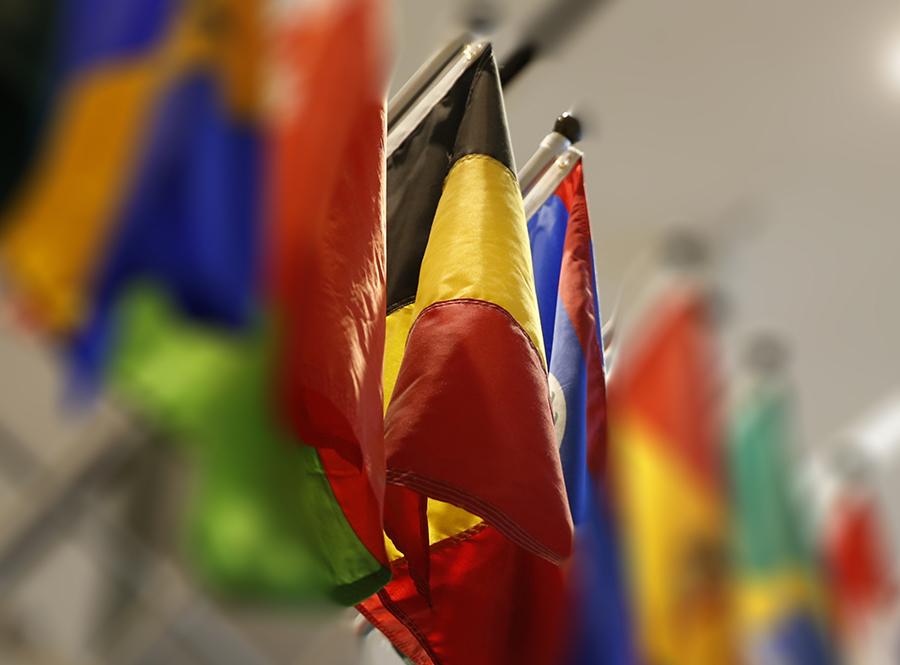
The national flag of Belgium is seen among other international flags positioned on a wall at the 9/11 Memorial Museum.
The national flag of Belgium is seen among international flags installed in the 9/11 Memorial Museum. The installation recalls the flags that flew in the mezzanine level of the original Twin Towers. Some of the flags, which were not on display on 9/11, are part of the museum’s collection.

The alerts, via buzzing text messages or emails, come way too frequently. The instinct shared by so many of us each morning is to reflexively look at our phones before we step one foot out of bed, before we even turn the lights on. This morning the first message I saw:

"CBSNY: At least 13 killed in explosions at Brussels airport, metro."

In that short message, the aftermath of another terrorist attack was brought into my family’s home in New York City. The TV goes on, flickering images of twisted metal undoubtedly obscuring the bodies of innocent commuters caught up in the attack, a painful broadcast seen worldwide. Then begins the wait for the slow but certain increase in the toll of those murdered and injured.

How many hundreds or thousands of messages to friends or loved ones were sent by those simply going to work or arriving at the airport right before the literal instant in which they were blown apart? Plans for meeting friends or colleagues for lunch, plans for the next days or weeks or months, ripped away. Families and loved ones never to be the same again. The injured to carry the physical scars for the rest of their lives. In parallel, there are those who are actually celebrating the "success" of this brutal attack. The fact that this notion is not unfathomable, is itself, a terrible reflection on what humanity has suffered through.

The morning routine in my home includes saying goodbye to my middle-school age son. This is the first year he has been entrusted with the responsibility of taking the subway by himself to school in lower Manhattan. This morning I had to decide what I should say as he was rushing out the door to the 1 train at Canal Street. Undoubtedly, I knew that my saying anything or not about Brussels wouldn’t change him or his classmates from hearing the news. As President of the National September 11 Memorial & Museum, I do believe deep in my heart that we have a responsibility, a duty, to educate generations about the real world we live in that has this type of terror in it—and also equally as importantly, to express how we as a global community come together with love and limitless compassion in the ensuing aftermath.

Well, what did I do this morning? I remembered the first subway rides that I took living in Manhattan after 9/11. Memories of packed trains, of suspicion. The moments of internal panic and the horror of what unfolded in the heart of this city and its Twin Towers. Simply put, I remember being scared.

No part of me this morning had a safety concern for the city’s subways, we are blessed with the deeply committed and battle-tested NYPD and PAPD. This morning, I just wanted to delay, for at least one more subway ride, having my son sit on his daily subway commute to school thinking about what has happened and the certain and dreadful anxiety that comes with it.

By 9/11 Memorial President Joe Daniels

NYPD Headquarters Displays Portraits of 9/11 Heroes

NYPD Headquarters Displays Portraits of 9/11 Heroes

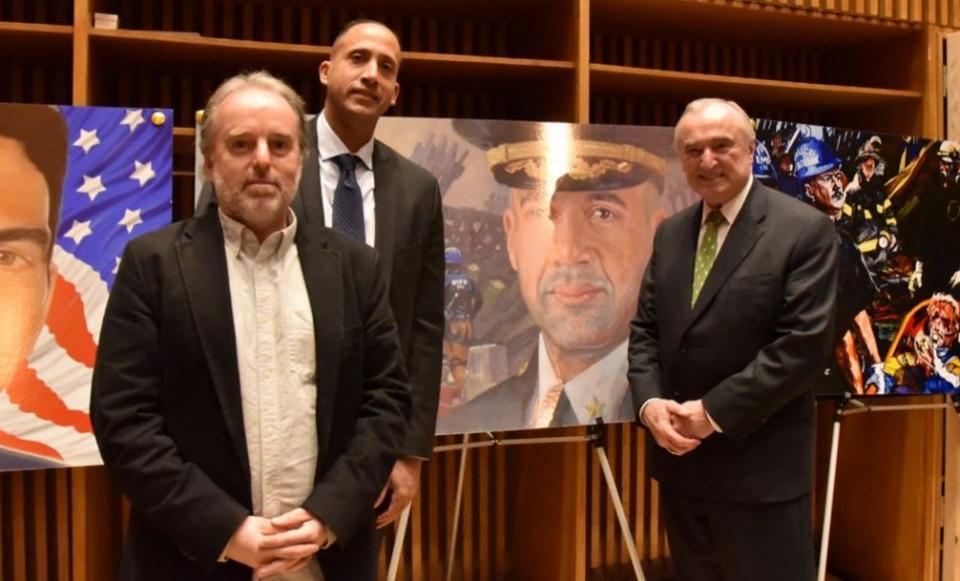
Stephen Gardner, Anthony Bonano and former NYPD Commissioner William Bratton stand next to a painting of NYPD Deputy Chief Steve Bonano.
Left to right, Stephen Gardner, Anthony Bonano and NYPD Commissioner William Bratton stand next to a painting of NYPD Deputy Chief Steve Bonano. Photo by NYPD

NYPD Commissioner William Bratton joined family members of 9/11 first responders at a luncheon on Feb. 1 to commemorate the extension of the Zadroga Act, according to the New York Daily News.

One of the family members in attendance was Jillian Suarez, daughter of Officer Ramon Suarez, who is depicted in a portrait helping a survivor on 9/11 shortly before he was killed. Jillian Suarez told the Daily News that the portrait of her father touched her heart, "to see how they did the painting, from his chin to every part of his body and the way they captured every moment, including the background."

The portraits were previously exhibited in the Senate Rotunda in Washington D.C. and are now on display inside NYPD Headquarters at 1 Police Plaza.

By Christine Murphy, 9/11 Memorial Administration/Researcher

Artifact Cards Debut as Part of 9/11 Memorial Education Program

Artifact Cards Debut as Part of 9/11 Memorial Education Program

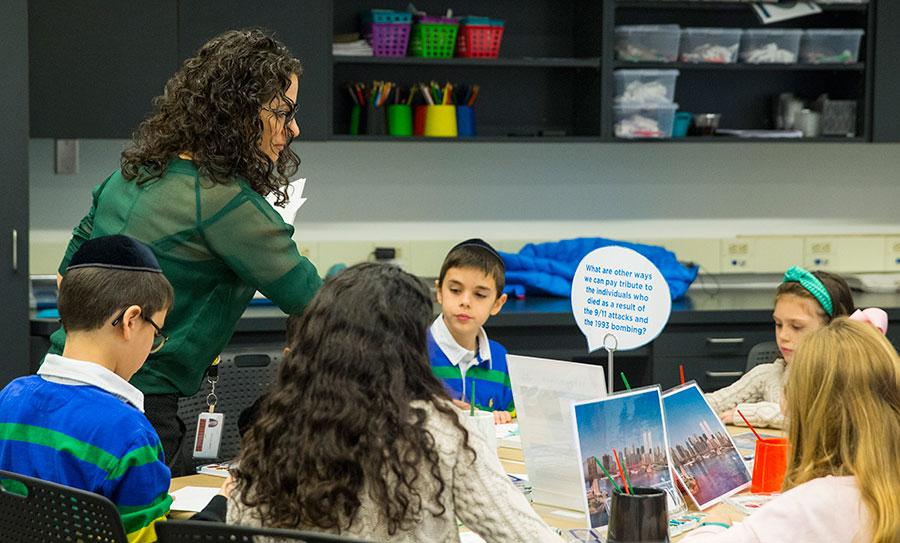
A group of children sit around a table as they participate in an activity station program at the Education Center.
Children visiting the Museum participate in Activity Station program. Photo by Jin Lee.

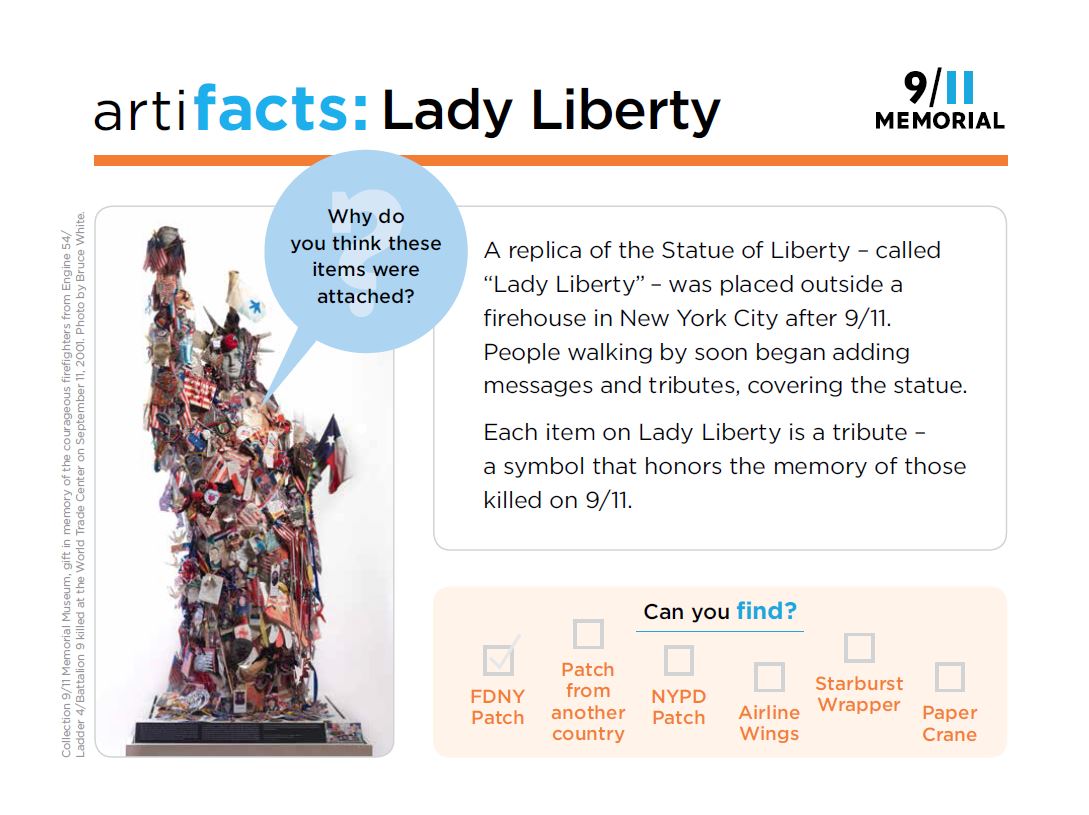
Beginning this Saturday, artifact cards will be distributed during the Activity Station program in the 9/11 Memorial Museum's Education Center. Intended for ages five through 12, the cards are part of a pilot program and were designed to be used by both children and their caregivers while visiting select artifacts in the Museum's exhibition spaces.

The activities are designed to foster an understanding of different Museum objects by including background information, observation questions, drawing and thinking exercises, and activities to do at home. The pilot program was inspired by the number of children visiting the Museum with adults and those not be able to participate in the various educational programs offered in the Education Center.

Following the completion of the pilot program, the artifact cards will be available online for those who may not have the opportunity to visit the Museum.

By Christine Murphy, Administration / Researcher

9/11 Memorial Docent Finds Healing in Volunteering

9/11 Memorial Docent Finds Healing in Volunteering

Sonia Agron, a 9/11 Memorial Museum docent, shows a visitor the virtual interactive for the Last Column in Foundation Hall.

A lifelong resident of Bronx, New York, Sonia Agron, now a 9/11 Memorial Museum docent, volunteered as a recovery worker on overnight shifts with the American Red Cross for weeks at ground zero after 9/11.

After waiting until the morning of September 12, 2001 to find out if her husband, NYPD officer Jose Agron, had survived the attacks as a first responder, she felt compelled to put her EMS training into action.

"The last message we got from him around 4 p.m. that day was that he was heading to 7 World Trade Center, which fell a short time later. We waited until 10, 11 p.m. and at that point, had family all around us," Sonia Agron said. "We started to plan for the funeral, having seen that video of 7 WTC coming down over and over on the news."

Agron credits her daughter for not losing hope after invoking a family motto 'without hope, we cannot cope.’

"After 9/11, for those few weeks I had lost my trust in the world. I couldn’t look at anyone on the train. It was paranoia. But coming down here, it restored my faith in humanity," Agron said. "I needed to do the overnight work. Meanwhile my husband was down here for the day shifts."

She says that once the 9/11 Memorial Museum put out a call for museum docents, she joined the first class that was prepared to open the museum in May of 2014.

"This was the best decision I could have made. I realize this is a place I need to be, sharing this story as we continue to heal. The training greatly enhanced what I knew and the speakers provided a different experience and really helped me complete the picture," Agron said.

A recent encounter with a couple visiting from Australia re-affirmed her connection to the site. One of them was a police officer and surprised to hear that Agron was a recovery worker at ground zero. "They asked for my story and I explained what it was like to not hear from my husband that day and how is spurred me to volunteer," Agron said.

While Sonia volunteers one day each week as a museum docent, her husband Jose Agron has also begun volunteering as a Visitor Services host.

If you are interested in becoming a museum docent volunteer, click here to fill out the application form. The deadline to complete the form is Friday, October 23.

By Anthony Guido, 9/11 Memorial Director of Communications
Blair: ‘Peace and Knowledge’ Needed in Fight Against Extremism

Blair: ‘Peace and Knowledge’ Needed in Fight Against Extremism

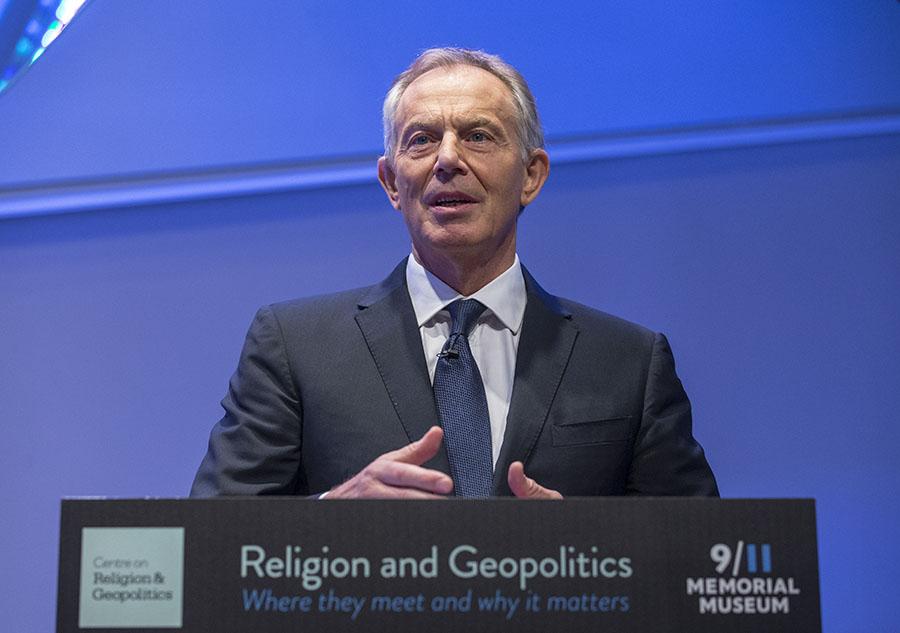
Tony Blair, the former prime minister of Britain, talks at a podium at the 9/11 Memorial Museum.
Tony Blair, former prime minister of Britain, talks at the 9/11 Memorial Museum. Photo by Jin Lee.

Security designed to contain and prevent terrorism since 9/11 is important, but not the only answer in confronting violent extremism worldwide, said Tony Blair, the former prime minister of Britain. The ideology that propels religious-based extremism also must be met head on with far-reaching education and true understanding. "If the roots are deep, we have to go down to them and uproot the poisonous growth," Blair said yesterday, speaking at the 9/11 Memorial Museum. "We have to replace the seeds of hatred and ignorance with those of peace and knowledge."

Since leaving office, Blair, through work at the Tony Blair Faith Foundation, continues the fight against religiously-based extremism, 9/11 Memorial President Joe Daniels said. "Many of us here recognize the great debt that America owes to Tony Blair, who pledged immediately after 9/11 that the UK would join fully in the fight against al-Qaeda and violent jihadism," Daniels said. "[He] stood by his word, at a real political cost, and remains one of America’s strongest and most loyal friends." Blair’s speech coincided with the release of a report by his foundation’s Centre on Religion & Geopolitics. The "Inside the Jihadi Mind" report investigates the common ideology shared through propaganda by three leading extremist groups.

By 9/11 Memorial Staff

The Lens: Capturing Life and Events at the 9/11 Memorial and Museum

The Lens: Capturing Life and Events at the 9/11 Memorial and Museum

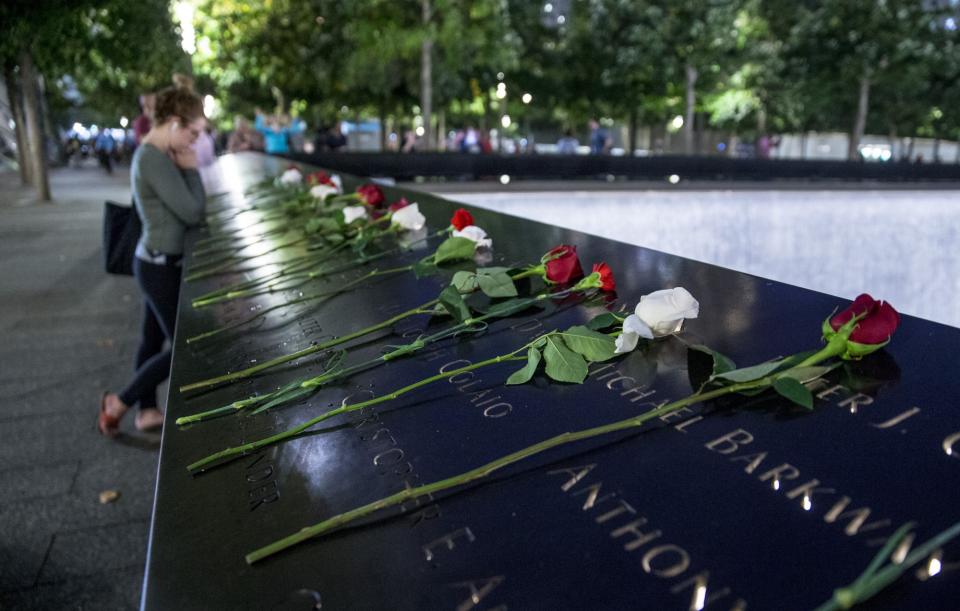
Red and white roses have been left on the bronze parapets at the 9/11 Memorial.
Tributes left on the 9/11 Memorial. Photo by Jin Lee.

The Lens: Capturing Life and Events at the 9/11 Memorial and Museum is a photography series devoted to documenting moments big and small that unfold at the 9/11 Memorial and Museum.The View: Flower tributes left on the northeast panels of the north pool at the 9/11 Memorial.

By Jenny Pachucki, 9/11 Memorial Content Strategist

Subscribe to 9/11 Museum