The Lens: Viewing the 9/11 Memorial

The Lens: Viewing the 9/11 Memorial

Memorial-pool-board-e1279307580490.jpg

Staff photographer Amy Dreher snaps a lot of pictures at the World Trade Center site, documenting the construction progress of the 9/11 Memorial. Amy also trains her lens on the smaller pieces that may be overlooked with a project of this magnitude. Through "The Lens: Viewing the 9/11 Memorial," share some of the unique vantage points captured by Amy.

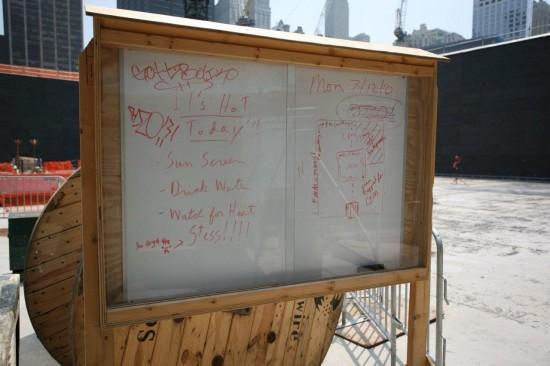
The Message: A close inspection of the message board reminds construction workers to drink plenty of water on hot days. The board sits in the 9/11 Memorial's north pool, where granite work is nearly completed.  Read more about the memorial pools here on the MEMO.

By Michael Frazier, Sr. Communications Manager for the 9/11 Memorial

A President Greets a Queen


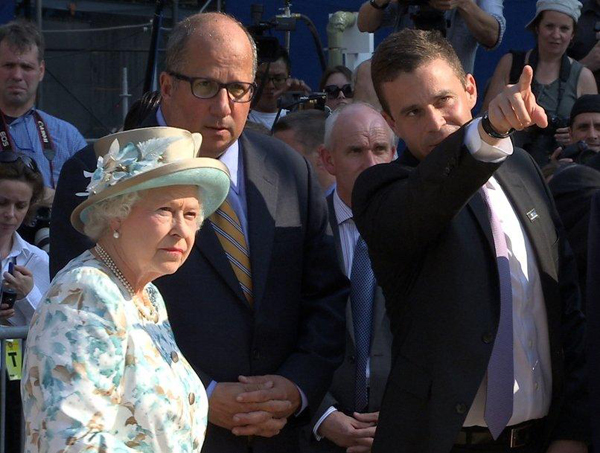
The recent visit of Queen Elizabeth II of the United Kingdom was special to New York City, her first trip there since 1976. It was also an exceptional moment for 9/11 Memorial President Joe Daniels, who greeted the queen on his birthday as she briefly toured the future site of the memorial.

The queen’s visit earlier this month was part of her North American tour.  On July 6, she visited the World Trade Center site, where she paid tribute to the 2,982 people killed on 9/11 and in the 1993 WTC bombing.  She was accompanied by her husband, Prince Phillip. The queen’s son, Prince Charles, and his wife, Camilla, visited ground zero in 2005.  Prince Harry, the son of Prince Charles, visited last year and laid a wreath on the site.

The queen also visited The British Garden at Hanover Square, which memorializes the 67 British citizens who lost their lives on Sept. 11.

The following day after the queen’s visit to the WTC site, Londoners gathered in Great Britain to recognize the fifth anniversary of the July 7, 2005, terror bombings that killed 52 people.

By the  9/11 Memorial Staff

A Living History: The Stories Behind 9/11 Artifacts

A Living History: The Stories Behind 9/11 Artifacts

DavidBrinkHelmet.jpg

“A Living History: The Stories Behind 9/11 Artifacts” is a three-part series written by oral historian Jenny Pachucki of the 9/11 Memorial Museum and edited by Meghan Walsh, communications associate for the 9/11 Memorial. "Three Ensembles: The Seasons of Ground Zero"  is part 3 of 3 in the series. (All photos by 9/11 Memorial staff)

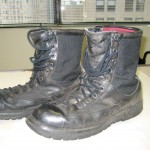
NYPD officer David Brink recently arrived at the 9/11 Memorial Museum's office with a large suitcase.  From it, he pulled out what he called his "three ensembles," all of which he donated to the museum's collection along with other storytelling artifacts. Each of the three ensembles were articles of clothing that correspond to certain times Brink worked at ground zero for nine months during the recovery period.


A Clear, Blue Sky on 9/11

On September 11, 2001, Brink dressed in light clothing perfect for a beautiful fall day. Brink recalled donning his standard issued emergency services unit response uniform, consisting of sturdy black boots, gun belt, ropes and repelling gear. The uniform was completed with a Scott air pack. While his response uniform was light, his gear weighed about 70 pounds.  “It is mind-blowing to think about the men and women who attempted to climb the stairs of a 110-story building on a hot day, carrying 70 pounds of gear,” said Oral Historian for the 9/11 Memorial Jenny Pachucki.  “It makes sense that they would want their clothing to be a light as possible.”


Among the Protective Gear, a U.S. Flag

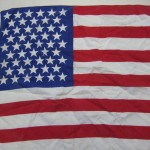
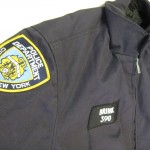
Laden with protective gear, Brink sought inspiration in a piece of clothing that wasn't standard issued.  It was the U.S. flag scarf he “grabbed from the hospitality tent.”  He wore it around his neck as a reminder of the swell of patriotism and support he felt while working “on the inside.” A uniform supply stored donated battled tested pants, jackets and first-responder patches to Brink and other workers. He was grateful for the clothing donations because he was able to replace, without any cost to him, NYPD uniforms damage at the site. NYPD officers are required to pay for their own uniforms.


Recovery Work Continues into the Bitter Cold

As fall turned to winter, Brink wore "winter wear" as recovery efforts continued. His heavy overall pants, which were donated to workers at respite centers, were topped by a thick NYPD jacket. The warm clothes were a welcomed reprieve from the face-numbing winds.  “Before we got them, we used to freeze our (expletive) off down there with the wind coming in off the Hudson," Brink said. "We felt like we were Washington’s troops at Valley Forge or something.”  The winter ensemble didn't get dirty as much because there wasn't “as much dirty digging” at that point in the effort.

Three ensembles, Three seasons

Brink's three ensembles share a common theme - attack, rescue and recovery - but each conveys a different story. It's artifacts like these that make an unprecedented event in history tangible and, while still difficult, easier to understand. The clothing aptly represent the "seasons of ground zero" and help close the gap between the people who experienced the aftermath and the people exploring 9/11 history. Many of the future visitors to the memorial museum won't be able to relate to what it was like to work amid rubble in a large pit in the middle of winter. It's authentic artifacts like what Brink donated that help make these experiences visceral for all.

By Jenny Pachucki, Oral Historian for the 9/11 Memorial

A Living History: The Stories Behind 9/11 Artifacts

A Living History: The Stories Behind 9/11 Artifacts

TwinTowerSymbolSteel-1.jpg

"A Living History: The Stories Behind 9/11 Artifacts" is a three-part series written by oral historian Jenny Pachucki of the 9/11 Memorial Museum and edited by Meghan Walsh, communications associate for the 9/11 Memorial. "Symbol Steel" is part 2 of 3 in the series.

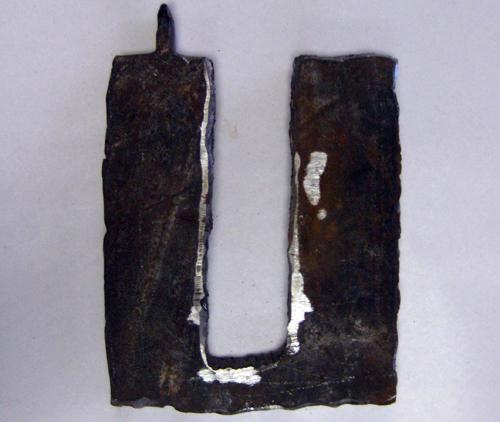
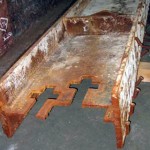
He knew how to handle a striker and blow torch. A deft welder, NYPD's David Brink began to forge symbols from remnant steel during his time at ground zero. The emergency services unit officer welded the symbols from large pieces of steel once piled at the southwest corner of the World Trade Center site near Liberty and Church streets.

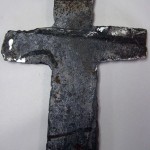
Recovery efforts slowed at site at that particular time because of major construction activity, which required workers to clear the area.  Brink asked members of an ironworkers union if he could use their equipment, and they consented.  In the nine months he worked at the WTC site, Brink created multiple crosses and one silhouette of the twin towers from the steel. He recently donated the works along with other artifacts to the 9/11 Memorial Museum.

Other ironworkers joined Brink in creating shapes from the steel during their spare time, which wasn't often.  They created religious symbols such as a cross or Star of David.  But not all steel had religious symbols. One beam at hangar at JFK Airport, where many of the site’s large artifacts and steel are stored, shows the cutout of the New York City skyline—with the twin towers still in place.

The above photos show the steel beam from which crosses were cut and a cross freed from the steel with a blow torch.

By Jenny Pachucki, Oral Historian of the 9/11 Memorial Museum

A Living history: The stories behind 9/11 artifacts

A Living history: The stories behind 9/11 artifacts

Brink-ID-Badge.jpg

"A Living History: The Stories Behind 9/11 Artifacts" is a three-part series written by oral historian Jenny Pachucki of the 9/11 Memorial Museum and edited by Meghan Walsh, a communications associate for the 9/11 Memorial. The following is a preview to the series, which begins Tuesday, July 13.

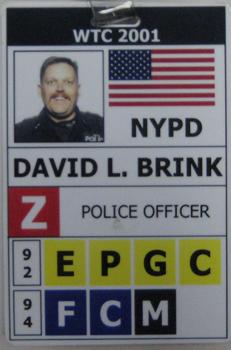
The collection of artifacts recently spread out on a table before the 9/11 Memorial Museum's curators and exhibitions team stirred their enthusiasm.  They couldn't contain their excitement when, last month, NYPD detective David Brink donated items steeped in the history of the Sept. 11 attacks. Brink responded to the attacks on Sept. 11 and immediately began evacuating civilians to safety. He survived the collapse of both twin towers, narrowly escaping with his life.  Brink worked the duration of the rescue and recovery effort at ground zero, and he saved everything that he possible could that would tell his story. 

“Brink is what we like to call a ‘curator’s dream come true,’” said Jenny Pachucki, oral historian for the 9/11 Memorial Museum. The variety of Brink's donated artifacts will truly help curators tell the story of recovery, survival and lost.

 A couple weeks ago, Brink packed articles and items he saved from 9/11 into a large suitcase and came to the memorial offices in lower Manhattan, where he donated them to the museum's collection. 

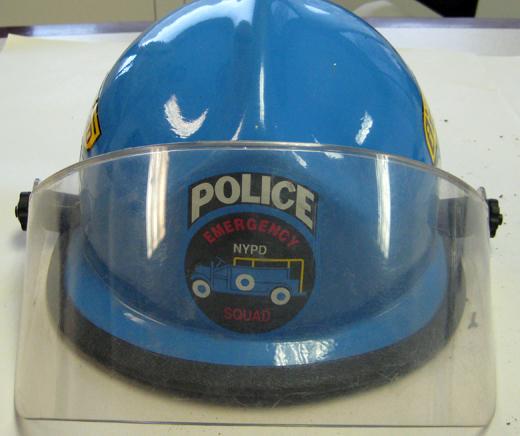
Brink’s collection includes World Trade Center steel, NYPD helmets and gear worn on Sept.11, and tools used during rescue and recovery operations at ground zero. Over the next three days, read about these artifacts and Brink on The MEMO blog.

By Jenny Pachucki, Oral Historian for the 9/11 Memorial Museum

Britain marks 5th anniversary of terror attack

Today marks the fifth anniversary of the multiple suicide bombings on July 7, 2005, that killed 52 people in London. The terror attacks occured on three subway cars and a bus.

"It was a dreadful day, but it is also a day that will remain, I believe, a symbol of the enduring bravery of the British people," Prime Minister David Cameron told the House of Commons, according to an Associated Press report.

A day before the London bombing anniversary, Queen Elizabeth II of England  visited the World Trade Center site, where the 9/11 Memorial is being completed to pay tribute to the 2,982 lives lost on Sept. 11.  She was greeted by Mayor Michael Bloomberg, who serves as chairman of the 9/11 Memorial; 9/11 Memorial President Joe Daniels and others. It was the queen’s first visit to the site, also known as ground zero, and it was her  first trip to New York City since 1976

The Queen's presence at the site of the 9/11 attacks and today's anniversary of the London bombings underscores that terrorism can occur on any continent, in any city or community. But born from these atrocities on America's East Coast and London was a shared resolve.  Both cities and their leaders have pledged to combat terrorism and intolerance.

Daniels, who spoke briefly with the queen on her tour of the site, once said of the London bombings:

"That day was a horrible reminder of what we experienced here in New York City on September 11, 2001, and February 26, 1993. In the wake of the London bombings, many did whatever they could to show support for the British, just as the world community had done for Americans after 9/11. As the U.S. Army band played God Save the Queen in Washington, DC, condolence messages, tributes, and flowers were left at British embassies and consulates around the world. Our thoughts and prayers centered on the victims, their families, and the survivors. It hit home that the acts perpetrated in London were an assault on all those who treasure the freedom to live without fear."

In the coming months, the ninth anniversary of the 9/11 terror attacks will be recognized. Spend today remembering those who died in terroristicacts in London.  Visit the UK's official website, and learn more about the permanent memorial built in Hyde Park honoring the victims of the July 7, 2005, bombings. The memorial is comprised of 52 stainless steel pillars, representing each victim.

By Michael Frazier, Sr. Communications Manager for the 9/11 Memorial

Sea to Shinning Sea

Sea to Shinning Sea

11-Flag-e1278251213619.jpg

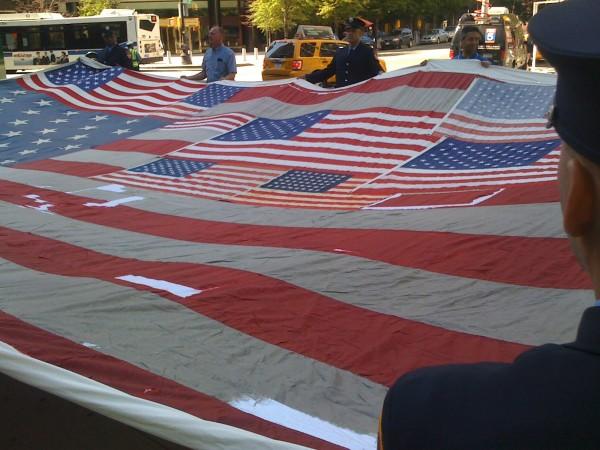
Displaying Old Glory: Members of the FDNY and volunteers unfurl a U.S. flag recovered from ground zero that was stitched back together several years later with parts of other American flags. (Photo by Michael Frazier)

Like Americans across the country, today I'm celebrating July 4th with family and friends.  And like you, sometime between the barbeques and the fireworks, I’ll be sure to pause to remember the values upon which our country was founded, and for which so many young men and women have given their lives.

This spirit of defending freedom no matter the cost, is the same spirit that exists here at the World Trade Center site in New York City, as I watch the building of the 9/11 Memorial.

We all remember the days and weeks after 9/11, when we saw something unbelievable emerge from the tragic scenes at ground zero, the Pentagon, and Somerset County, Pennsylvania: a sense of American pride and unity that swept across the country.

This is a project in which the entire nation is truly invested.  Hundreds of workers at the site are helping to ensure the opening of the Memorial in time for the 10th anniversary of the attacks.  Hundreds of thousands of individuals from all 50 states and 37 countries have generously donated in support. Millions more will visit the 9/11 Memorial when it opens to join in remembrance.

I wish you a safe and happy holiday and God bless the United States of America.

By Joe Daniels, President and CEO of the 9/11 Memorial


Rebuilding: The first director of WTC looks toward the future as he recalls the past

Rebuilding: The first director of WTC looks toward the future as he recalls the past

IMG_3908-1024x682.jpg

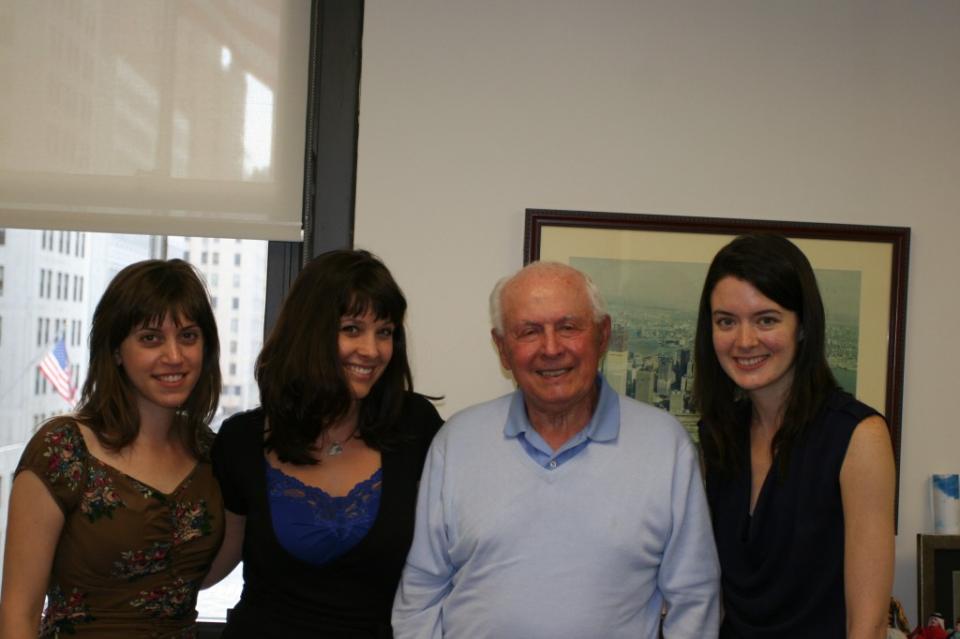
The first director of the World Trade Center and the man behind the twin towers' original construction recalled picking the architect for what were once the world's tallest buildings and his ongoing relationship with the Frenchman who walked a high wire strung between the two skyscrapers.

The WTC's first director, Guy Tozzoli, chatted Monday with museum staff of the National September 11 Memorial & Museum. He was hired in 1962 by then-named Port Authority of New York to head the development, construction and management of the World Trade Center, a complex aimed to revitalize lower Manhattan.  He was responsible for the entire project and chose architect Minoru Yamasaki.

Yamasaki originally designed several 80-story towers for the site, but Tozzoli was persistent in increasing the design to feature twin 110-story buildings.  Tozzoli said he has the tendency to keep making things bigger, even now.

He now serves as president of the World Trade Center Association, an organization he founded in 1970 to connect countries through economic activity.  At its inception, the association had only 15 participants from 15 countries.  Today, there are 325 "World Trade Centers" in cites across 92 countries.  In 1999, Tozzoli was nominated by the South Korean and North Korean governments and was accepted as a candidate for the Nobel Peace Prize for his work.

“I like what I do,” said Tozzoli, who at the age of 88 still heads the organization.

Tozzoli oversaw the World Trade Center in New York from its construction in the 1960's until its destruction on Sept. 11, 2001.  His office was located on the 77th floor of the North tower, and he enjoyed his time working there.  "I loved it," he said.

When speaking about the towers, Tozzoli said, “Windows on the World was my favorite place,” a restaurant he hopes to see recreated in one of the future towers.

Tozzoli also joked about his relationship with Philippe Petit, the French high-wire artist who “danced” across a tightrope between the twin towers in 1974.  The pair, who are now friends, speak at public lectures together.

“It’s really fun,” said Tozzoli, who loves sharing stories like Petit's high-wire act. “They become part of you," he said, still remembering the day mountain-climber George Willig scaled the 110 stories in 1977.

On Sept. 11, Tozzoli watch the towers he built burn and collapse while he was arriving late to work from the Holland Tunnel.

“I wanted to go down and be with the people,” he recalled.  But he was turned away after showing a police officer his credentials.  "He said, 'I don't care if you're the pope.'"

Now, Tozzoli said he wants “to help people do it all over again” and he said he's “looking forward” to visiting the 9/11 Memorial when it is completed next year.

Tozzoli also hopes to still be around when the new towers are finished.  He joked, "I'm older than God."

By Meghan Walsh, Communications Associate for the 9/11 Memorial
Actor robert de niro joins 9/11 memorial to show signs of support (Updated X3)

Actor robert de niro joins 9/11 memorial to show signs of support (Updated X3)

MayorBobJoeSignsofSupport.jpg

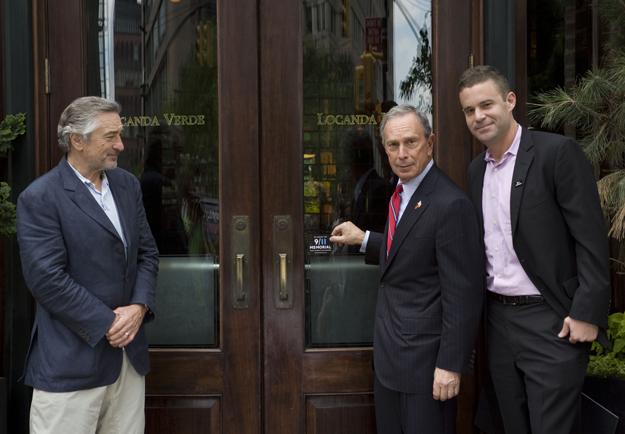
The National September 11 Memorial & Museum was joined today by Mayor Michael R. Bloomberg, Oscar-winning actor Robert De Niro, 9/11 Memorial President Joe Daniels and members of the business community who gathered in Tribeca to encourage businesses to take part in the Signs of Support initiative.

Signs of Support is a program welcoming businesses to publicly show their support by proudly displaying a special decal on their front doors or windows. The decal is a shining symbol of the continued rebuilding of lower Manhattan that was largely spurred by the business community after 9/11. More than 2,500 decals have been sent out for display at businesses citywide.

Update: Representatives of participating businesses joined Mayor Bloomberg, De Niro and Daniels outside Locanda Verde restaurant, 377 Greenwich St.  Century 21 was represented by Jim Copland and Heather Feinmel, Lenny's Bagels by Curt Huegel and Johnny Heil, and AT&T by John Jefferson. Here's how NY1 covered the story.  DNAinfo.com also posted a series of pictures online.

The Signs of Support program is co-chaired by De Niro and film producer Jane Rosenthal, both longtime 9/11 Memorial board members.  Together with Craig Hatkoff, De Niro and Rosenthal co-founded the Tribeca Film Festival in 2002 to help rebuild Lower Manhattan.  Mayor Bloomberg, who helped pushed progress of the 9/11 Memorial forward, is chairman of the 9/11 Memorial.

From retail and restaurants to banking and communication services, businesses from across the city can pledge their support in helping to develop, build and sustain the 9/11 Memorial, a national tribute to the nearly 3,000 people who lost their lives on Sept. 11.

To show gratitude for the donation, businesses participating in the program are featured on the memorial’s website and in the business supporters’ directory at the 9/11 Memorial Preview Site, 20 Vesey St.


By Meghan Walsh, Communications Associate for the 9/11 Memorial
 

9/11 memorial construction continues moving forward

9/11 memorial construction continues moving forward

National-9.11-Memorial-August-2007-Credit-Joe-Woolhead-711-300x200.jpg

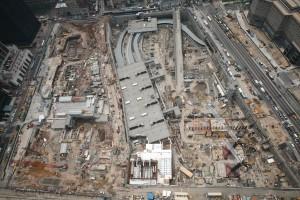
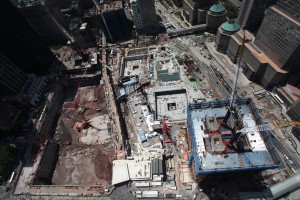
Above: Two photographs show the ongoing construction of the 9/11 Memorial with the first (left) displaying the beginning steps of reconstruction at the World Trade Center site in 2007, while the second photo shows the site as it looks today.  (Photos by Joe Woolhead)

Since construction officially began on the National September 11 Memorial and Museum in 2006, the World Trade Center site has transformed.

Where one used to see mostly mounds of dirt and tons of construction equipment, now two structurally defined Memorial pools are visible along with construction on One World Trade Center, the skyscraper commonly known as the Freedom Tower.

The photograph on the left, above, shows an aerial view of 9/11 Memorial construction in August 2007.  At that time, 580 metric tons of jumbo steel l-beams, to be used for the memorial and museum, had just arrived at the Port of Savannah, Ga., after a 4,000-mile journey from Luxembourg in central Europe.  The steel didn’t officially arrive on site until later that year.  More than 8,000 tons of steel are being used to construct the 9/11 Memorial and 100 percent of the steel has since been installed at the site.

The photograph on the right, taken last month by resident photographer Joe Woolhead, shows the highly anticipated construction of the North and South memorial pools, where dark granite panels are currently being placed.  The pools are about an acre in size, and they are situated within the footprints of the original towers.  Ten large pumps will create 40 pounds of pressure to circulate 52,000 gallons of water per minute for the artificial waterfalls.  These will be the largest man-made waterfalls in the country.

The 9/11 Memorial will open Sept. 11, 2011.

By Meghan Walsh, Communications Associate for the 9/11 Memorial
Subscribe to 9/11 Memorial