Post-9/11 Recovery Efforts Impacted Volunteer’s Life

Post-9/11 Recovery Efforts Impacted Volunteer’s Life

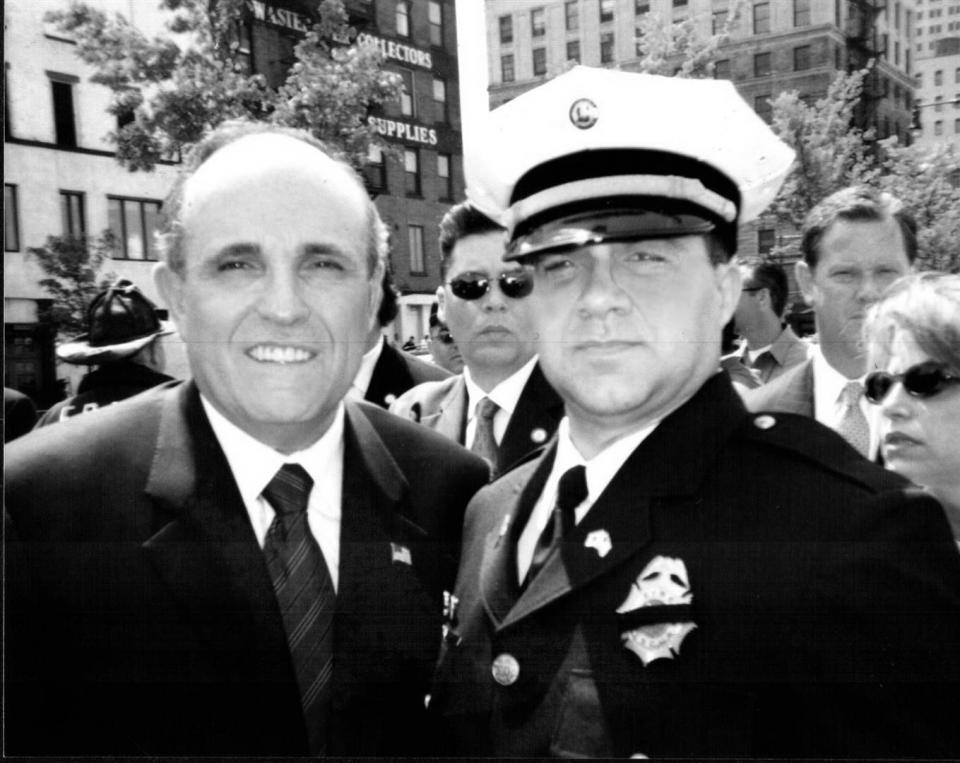
In this photo from 2002, Mayor Rudy Giuliani and Thomas Bowen walk along the West Side Highway after taking part in the Last Column escort.
Thomas Bowen joined the Last Column escort leaving the World Trade Center site on May 30, 2002 and walked with Mayor Rudolph Giuliani along the West Side Highway. (Photo courtesy of Tom Bowen)

Following 9/11, thousands of investigators, engineers, laborers and volunteers joined the rescue and recovery efforts at the attack sites. In late May 2002, the ceremonial removal of the Last Column marked the end of the rescue and recovery work at the World Trade Center site. In recognition of the anniversary of the end of recovery this month, below is a story of somebody who participated in those efforts in New York City.

Tom Bowen of Huntington, West Virginia says working at Ground Zero affected his life “in a lot of ways – everything from physical issues, to the things that go through your mind, often on a daily basis.”

Assisting at the site from September 2001 through May 2002 as a volunteer with both the New York City Office of Emergency Management and the Federal Emergency Management Agency (FEMA), Bowen became involved in search and rescue. FEMA’s Urban Search and Rescue teams from 14 states supported the work of local police and firefighters during the recovery period.

When hopes of finding survivors faded, Bowen’s focus shifted to the search for remains of victims and trying to provide closure to those grieving over their lost loved ones.

Bowen commuted to New York from West Virginia for his shifts throughout those nine months. On one trip home, a Delta flight attendant silently passed him an encouraging message written on a napkin as he was disembarking. He also fondly remembers notes of support from New York City school children that were delivered to him and fellow recovery workers. He recalls these moments of kindness and connection as restorative.

In 2014, Bowen returned to NYC to visit the 9/11 Memorial Museum, where he recorded his thoughts at the “Reflecting on 9/11” exhibition.

“I think one big way that my life’s been affected is by understanding that we’re all in this together, and to be intentional about how we love and support people around us,” he says. “You never know when you’re going to be on the other side of that fence.”

A cornerstone of the Museum’s mission is to honor the courage and sacrifice of the rescue and recovery workers who responded in the face of unspeakable tragedy. The Rescue and Recovery Workers Registry preserves the stories of recovery workers, like Bowen, and their efforts after 9/11.

By Alison Hines, Exhibition Media Coordinator
Navy SEAL Rob O'Neill Recounts bin Laden's Death

Navy SEAL Rob O'Neill Recounts bin Laden's Death

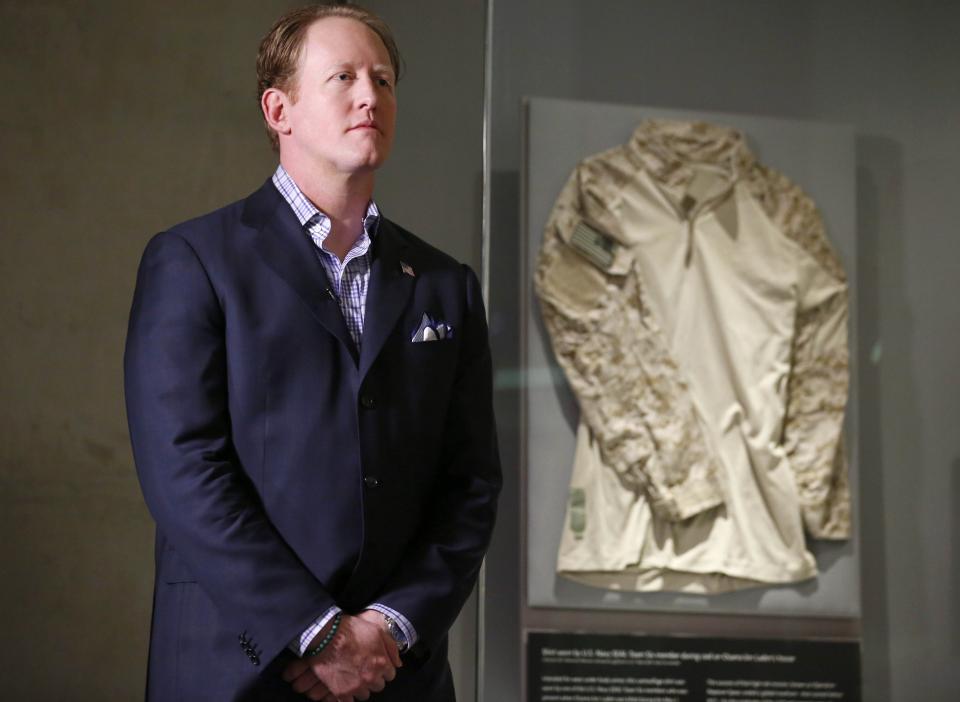
Former U.S. Navy SEAL Team 6 member Robert O’Neill stands in front of the shirt he wore during Osama bin Laden’s death, which is on display at the 9/11 Memorial Museum.
Former U.S. Navy SEAL Team 6 member Robert O'Neill stands in front of the shirt he wore during Osama bin Laden's death, on display in the 9/11 Memorial Museum. (Photo: Jin Lee)

Former U.S. Navy SEAL Team 6 member Robert O'Neill discussed Operation Neptune Spear, the mission that resulted in Osama bin Laden's death on May 1, 2011, in a special conversation held in the 9/11 Memorial Museum for members of the 9/11 community yesterday. Today marks the fourth anniversary of bin Laden’s death.

Before the event, O’Neill met with 9/11 family members in the Museum’s Foundation Hall, where the shirt he wore during the mission and other related artifacts are on display.

O’Neill then told a detailed story from his perspective about killing bin Laden and answered questions from an audience consisting of first responders, 9/11 family members, veterans and 9/11 survivors. Below are some topics O’Neill touched on:

His motivation for the mission: “I remember talking to the guys; there was never a hesitation. We’re going now, we’re going to do this for – the person I always bring up is the single mom that went to work on Tuesday morning and then decided it’s better to jump to her death than burn alive. We went for her. We went for the firefighters who were running up as everyone was running down. We went for everybody.”

Accepting the likelihood of death during the mission: “We accepted it; we weren’t afraid. We had been fighting since 9/11 almost to a point to get to a spot of preparedness to be good enough to get this mission done. This was a means – proof of concept, ‘we’re going to be able to do this,’ and we’re not coming back.”

Killing bin Laden: “A foot and a half in front of me was Osama bin Laden. And I shot him twice, and then once more. And it didn’t really sink in; the wife sort of came at me and there was like, two-year-old kid there. So I pulled her over to the bed and grabbed the kid. And I remember thinking to grab the kid because he had nothing to do with this. I don’t want him to be afraid. So I picked him up, put him with the wife. I turned around, other SEALs were coming in the room, and I kind of stopped there and looked at them. … [One of the SEALs] was looking at me, and said ‘Are you OK?’ I said ‘What do we do now?’ And he laughed and put his hand on my shoulder, and he said, ‘Now we go find the computers.’”

Read Fox News' coverage of the event.

By Jordan Friedman, 9/11 Memorial Research and Digital Projects Associate

Subscribe to