9/11 Museum Joins #GivingTuesday Social Media Campaign

9/11 Museum Joins #GivingTuesday Social Media Campaign

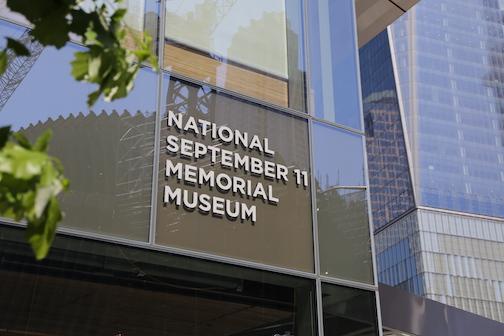
The entrance sign of the 9/11 Memorial Museum is displayed on the Museum’s glass facade. It reads “National September 11 Memorial Museum. One World Trade Center is visible in the background.
The 9/11 Museum is participating in the #GivingTuesday campaign, encouraging people to give back. (Photo: Amy Dreher)

The 9/11 Memorial Museum is joining with organizations around the world on Dec. 2 for #GivingTuesday, a global day devoted to giving back to your community.

The #GivingTuesday website states that the day enables charities, families, businesses, community centers and students to "come together for one common purpose: to celebrate generosity and to give."

Find a way to bring together your family, community, company or organization, develop an action to give back and then share your efforts on social media using the #GivingTuesday hashtag.

The museum receives funding only through donor and visitor support. Join us today in giving back. Click here to donate to the 9/11 Memorial Museum.

By Jordan Friedman, 9/11 Memorial Research and Digital Projects Associate

Video Camera Captured Critical Moments of 9/11

Video Camera Captured Critical Moments of 9/11

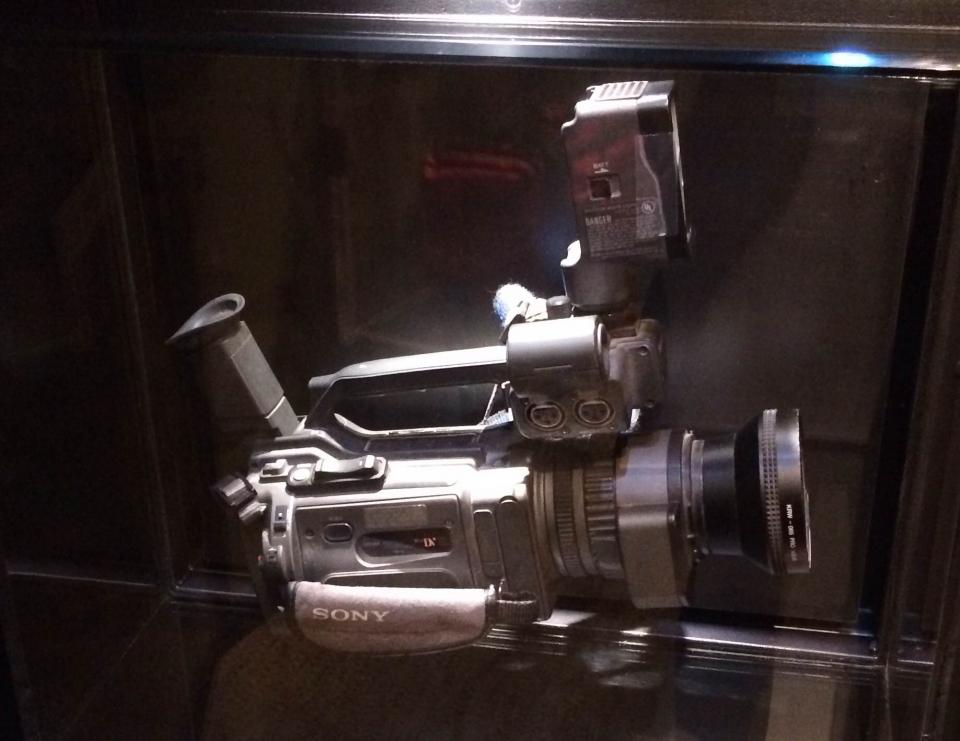
The Sony video camera belonging to Gedeon Naudet is displayed at the Museum. The camera captured critical moments, including the first plane crashing into the North Tower.
Gedeon Naudet used this video camera to capture critical moments, such as the first plane crashing into the North Tower, on camera. (Photo: Deena Farrell)

In summer 2001, brothers Gedeon and Jules Naudet were creating a documentary film about FDNY Ladder Company 1, which shares its quarters in lower Manhattan with Engine Company 7 and Battalion 1.

On 9/11, Jules was shadowing Battalion Chief Joseph Pfeifer and other firefighters on a routine call near the World Trade Center while Gedeon remained in the firehouse. After hearing a loud noise – the sound of Flight 11 roaring toward the North Tower – Jules captured what became rare footage of the aircraft hitting the building. He began filming people on the street as they stared at the fire in shock and horror.

Concerned about his brother, Gedeon hitched a ride to the World Trade Center. He was inside the North Tower when the South Tower collapsed, subsequently taking refuge inside a nearby fire truck.

When he ventured outside, Gedeon used the light on his camera to navigate through the thick dust. He assisted an injured man and then made his way back to the firehouse to await news of his brother, fearing that Jules had died. But two and a half hours later, the brothers were reunited.

Jules and Gedeon Naudet donated the video camera used on that day to the 9/11 Memorial Museum, and Jules' camera is in the Smithsonian's National Museum of American History. Their footage became part of a documentary titled “9/11,” which aired on CBS in 2002. A commemorative DVD by the filmmakers is on sale in the Museum store.

By Deena Farrell, 9/11 Memorial Communications Intern

Docent Highlights Compassion, Commemoration at Museum

Docent Highlights Compassion, Commemoration at Museum

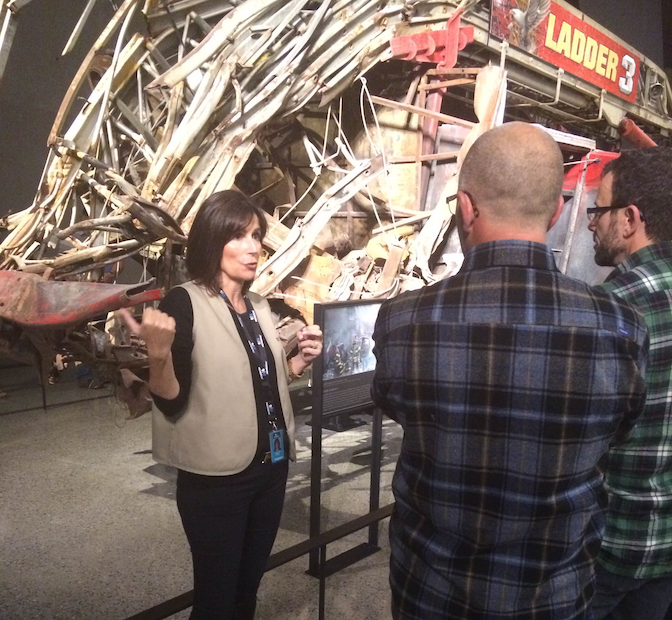
Maria Jaffe, a participant in the 9/11 Memorial Museum’s docent program, gives a tour to two men visiting the Museum. A heavily damaged fire engine is on display behind her.
Maria Jaffe, a participant in the 9/11 Memorial Museum's docent program, gives a tour to museum visitors. (Photo: Deena Farrell)

For 9/11 Memorial Museum docent Maria Jaffe, volunteering is her way of honoring the nearly 3,000 lives lost on 9/11.

"The museum is magnificent,” Jaffe said. “Even though it is 13 years later it still kind of feels like it was yesterday.”

For Jaffe, the daughter of a retired firefighter, the museum experience focuses on both remembering the victims and interacting with the museum’s guests.

"I have met the most interesting and fascinating people here," she said. "The people you encounter here are very compassionate and sensitive people, and that's what this museum is all about."

The docent volunteer program requires 60 to 70 hours of training prior to starting and then a minimum commitment of one year.

"I hadn't been in school in 30 years and all of a sudden I was having homework, exams, and oral presentations," Jaffe joked.

Despite rigorous training, Jaffe feels as though this experience has been worth it because of the amazing people she has met. “Aside from raising my three children, it has been one of the best things I have ever done,” she said.

Working with her fellow docents has also been a rewarding experience for Jaffe, she said, describing them as “a brilliant and dedicated group of people.”

Jaffe stresses the importance of what the visitor can bring emotionally to the museum. The interaction and bonding of people is a constant occurrence.

"You have conversations with these people, and when they walk away you say to yourself 'wow,'” she said. “There are really so many people in this world that are kind.”

Learn more about the docent program here.

By Deena Farrell, 9/11 Memorial Communications Intern
Flashlight Symbolizes Survivors’ Journey to Safety

Flashlight Symbolizes Survivors’ Journey to Safety

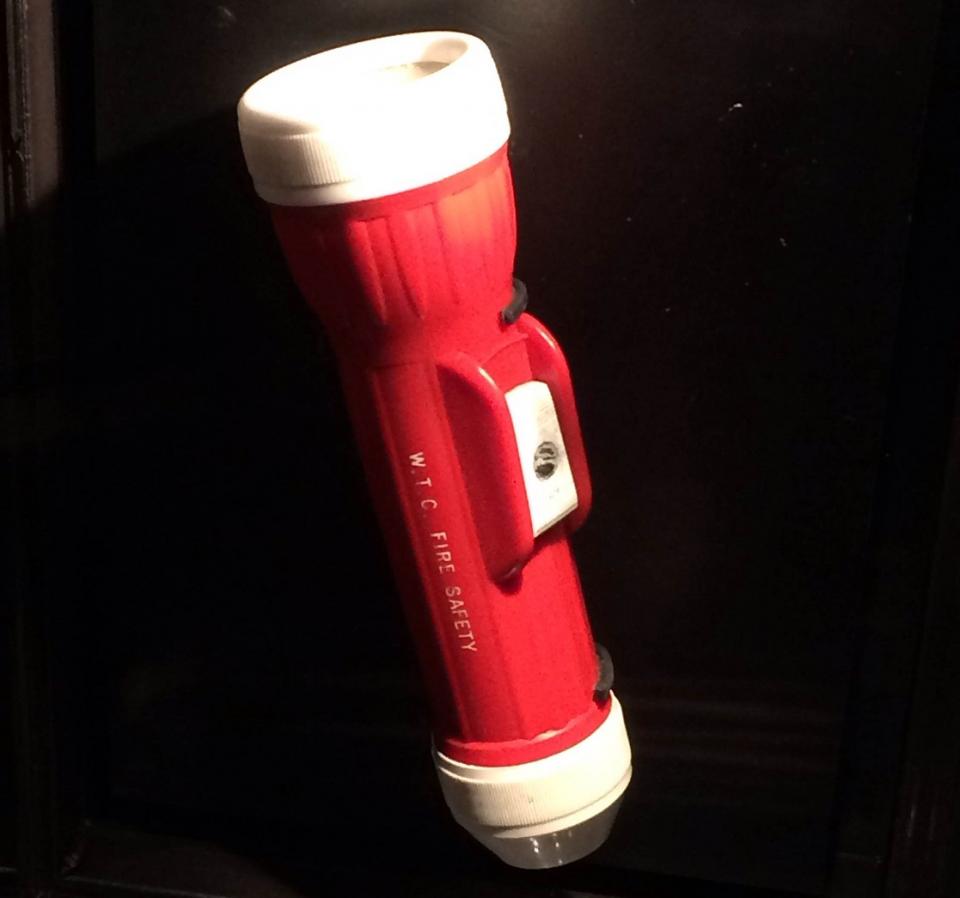
A red and white flashlight used by survivors on 9/11 is displayed on a black surface at the Museum.
This flashlight serves as a momento of the survival of two employees at the World Trade Center on 9/11. (Photo: Deena Farrell)

Although Brian Clark and Stanley Praimnath were in two separate offices of the South Tower on 9/11, each heard the impact of hijacked Flight 11 crashing into the North Tower.

Praimnath, on the 81st floor, began evacuating with colleagues down the stairs. But, at the direction of a security guard – who assured Praimnath that the danger was confined to the other tower – Praimnath returned to his office. Praimnath was again sitting at his desk when hijacked Flight 175 struck the South Tower.

According to The New York Times, Praimnath could see the plane flying past the Statue of Liberty, directly toward him. When the plane crashed, its nose ended up about 130 feet from his desk.

Trapped behind a wall of debris, Praimnath banged on the wall and called for help. Clark, a volunteer fire warden who had been heading down from the 84th floor, heard Praimnath’s cries. Clark assisted Praimnath out of the rubble and used his flashlight to light their way down the stairwell.

The two men evacuated the building minutes before it collapsed. The pair was eventually separated when the North Tower fell.

A year later, Clark gave Praimnath the flashlight that had guided them to safety as a memento of their survival.

By Deena Farrell, 9/11 Memorial Communications Intern
Subscribe to